Skip to content
Trail&Pass
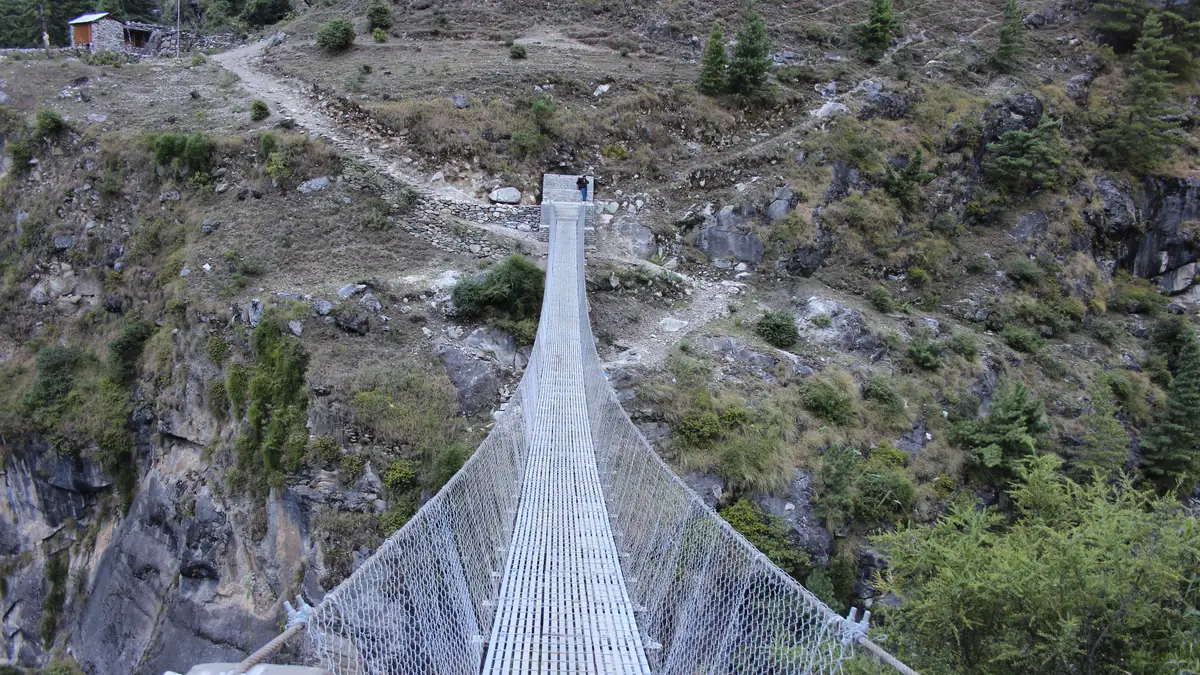
A long suspension bridge across the gorge

Manaslu Circuit · Permits and guide requirement

Permits and guide: what the restricted area demands and who checks it

The Manaslu is the trek with the most paperwork in Nepal: four permits, one of them only through an agency, one only for groups, and an authority that wants to see your original passport. That is why there are no products without a guide here and why every package needs a day in Kathmandu before the trek. Here are the fees by season, the rules for single travellers, the checkpoints and the mistakes to avoid before departure – with the caveat that the official pages of the Department of Immigration were not accessible to us and we cite operator figures from 2026.

Editorially checked on 25 September 2026Prices as of 26 September 2026Photo: MITESHSTHA, CC BY-SA 4.0
In short
  • Four permitsRestricted Area Permit (RAP) for Jagat to Dharapani · Manaslu Conservation Area Permit (MCAP) · Annapurna Conservation Area Permit (ACAP) from Dharapani · TIMS card; with the Tsum Valley a second RAP
  • FeesRAP September–November USD 100 for the first 7 days, then 15 per day; December–August 75 and 10 · MCAP NPR 3,000 (≈ USD 22) · ACAP NPR 3,000 · TIMS NPR 2,000 (≈ 15) · Tsum: USD 40 (Sept–Nov) or 30 for the first week, then 7 per day – all operator figures 2026
  • Who appliesOnly a trekking agency registered in Nepal, with original passport, visa and two photos per person, at the Department of Immigration in Kathmandu, Sunday to Friday, one working day; the guide appears on the permit with his licence number
  • Two or oneUntil March 2026 at least two travellers per permit; according to operators single trekkers with a guide since 22 March 2026 – not officially verified. Seven of the 32 packages still require two
  • ChecksPolice post Jagat (entry), MCAP office Namrung, exit Dharapani; keep permit and passport at hand, the guide carries the papers

The four permits and what they cost

Restricted Area Permit (RAP). The area between Jagat and Dharapani – the former village councils of Sama, Lho, Prok, Chumchet and Chhekampar – has been a restricted area with a special permit of the Department of Immigration since it opened in 1991. It is charged per week: from September to November USD 100 for the first seven days and 15 for each further day, from December to August 75 and 10. A standard circuit spends eight to ten days in the restricted area (Jagat day 2 to Dharapani day 11), so USD 115 to 145 in high season. Trek Mania says it honestly: the package contains “seven days” of RAP, the rest you pay. If you walk the Tsum Valley you need a second RAP for Chhekampar and Chumchet: USD 40 for the first week from September to November, 30 otherwise, then 7 per day. MCAP. The Manaslu Conservation Area Permit of the National Trust for Nature Conservation, NPR 3,000 (around USD 22) once, valid for the whole conservation area from Philim; checked in Namrung. ACAP. Once you come over the pass to Bimthang you are in the Annapurna conservation area: NPR 3,000, stamped in Dharapani. TIMS. The Trekkers' Information Management System card, NPR 2,000, since 2023 only through agencies; not all operators name it for Manaslu (Trek Mania, Discover Altitude, World Himalaya, Alpine Club, Swissa do), because the RAP effectively replaces the registration. Some add a municipality levy (Everest Trekking Routes, Himalayas On Foot name a “Manaslu Rural Municipality Tax”), a few hundred rupees. In total: USD 180 to 200 per person in high season, 145 to 165 otherwise, included with 27 of the 32 packages.

Guide requirement and the two-person rule

The RAP is not issued to individuals but to a registered trekking agency for a group with a licensed guide whose number appears on the permit. That is older than the general guide requirement of April 2023 and applies regardless of it: no agency, no permit; no permit, no way past the police in Jagat. That is why all 32 products here are packages, and why you cannot walk the Manaslu like the Annapurna Circuit with a guide you hired yourself – he has to work through an agency that is liable for rescue and insurance.

The second rule for decades was group size: at least two paying travellers per permit, guide not counted. Adventure Glacier still writes it into the product description in 2026, Himalayas On Foot likewise, and seven packages require two people. Operator blogs report that the Department of Immigration decided on 22 March 2026 (8 Chaitra 2082) to admit single trekkers in all thirteen restricted areas – with agency and guide as before. We could not verify this officially; the authority's site was not accessible. In practice it used to mean: if you came alone, you paid a second “ghost permit” for a person who did not walk, around USD 100. 25 of the 32 packages today take single travellers with a supplement; whether the new rule or the old ghost permit is behind it, nobody says. Ask before booking what you pay alone – Magical Nepal quotes 1,349 instead of 1,081, Sole Encounters 2,069 instead of 1,950.
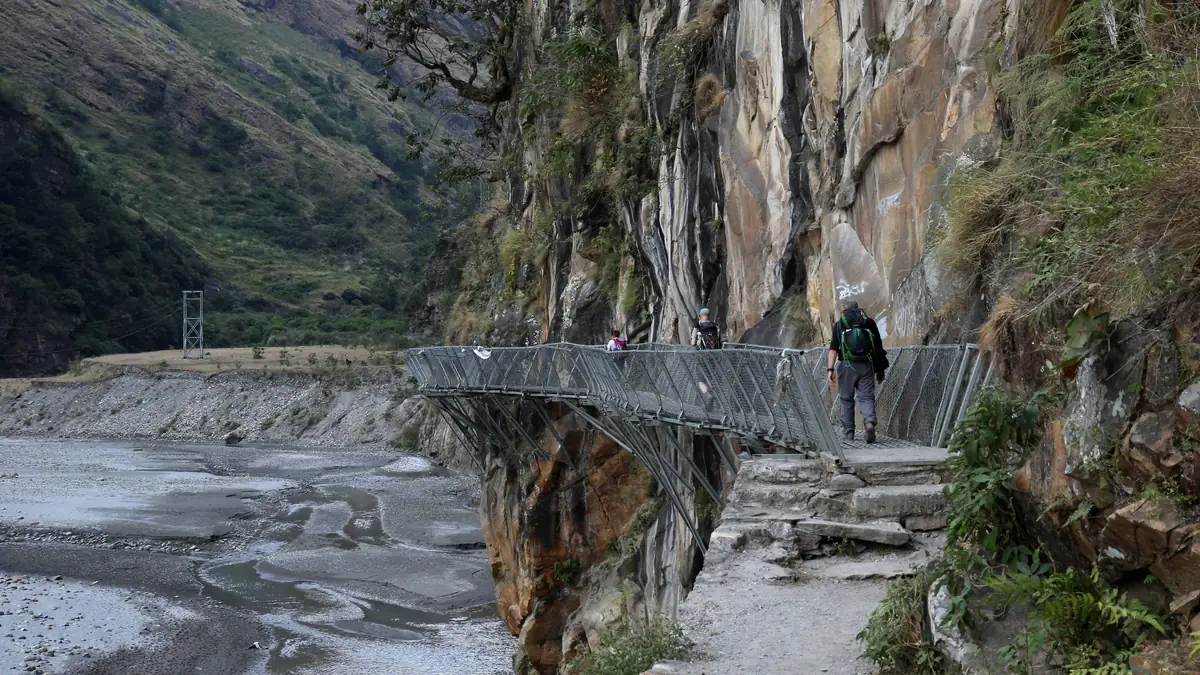
The trail on the rock above the Budhi Gandaki near Jagat, with a bridge
Beyond Jagat the restricted area begins. The police post at the village entrance stamps the permit; without a guide nobody continues from here.Photo: Jay Ramji from UK, CC BY-SA 2.0

Procedure and checkpoints

WhenWhatWho and where
At bookingPassport details (name, number, validity, nationality) to the operatorSole Encounters, Trekking Planner, Adventure Glacier require them at once
Day before the trekHand in original passport with visa, two passport photos, proof of insurance; briefingAgency applies for the RAP at the Department of Immigration, Kalikasthan, Kathmandu; Sunday to Friday, one working day
The evening beforePermits back, luggage into the duffel, check sleeping bagBriefings around 5 pm; Trek & Adventure collects the permit fees in cash here
Jagat, day 2Police post checks RAP and passportEntry to the restricted area; the date is stamped, the week starts
Namrung, day 4MCAP officeStamp; here the upper Nubri begins
Samagaon / SamdoArmy and police postsOccasional checks; the Tibet border is closed
Dharapani, day 11–12Exit from the restricted area, ACAP officeLast stamp; days in the restricted area are counted, extra payment if exceeded

Procedure per operator notes (Sole Encounters, Trek & Adventure, Himalayan Leisure) and practice 2025/26; the authority's opening hours without official confirmation.

The five mistakes that cost you the permit

Arriving in Kathmandu on a Saturday. The authority is closed on Saturdays; the permit comes on Sunday at the earliest, the trek starts on Monday. Packages with an arrival day on Friday or Saturday lose a day. Passport in the hotel safe. The agency needs the original, not the copy – Sole Encounters and Himalayan Leisure collect it on permit day and return it in the evening. Visa too short. A 15-day visa is just enough for a twelve-day tour with two hotel nights; for 14 to 19 days you need the 30-day visa for USD 50, and the extension in Kathmandu costs time. Counting the days in the restricted area wrongly. The RAP runs from the stamp in Jagat; if you wait a day in Samdo because of snow, you pay USD 15 extra at the exit – or the guide pays and you reimburse him. No photo with you. Two passport photos per permit, available in Thamel in ten minutes, but not in Machha Khola.

Questions about permits and guide

Can I apply for the permit myself?

No. The Department of Immigration issues the Restricted Area Permit only to registered trekking agencies, with a licensed guide on the application. That is the difference from the Annapurna Circuit, where you can get ACAP and TIMS yourself.

What if I travel alone?

25 of the 32 packages take single travellers, mostly with a supplement of USD 200 to 300. Whether that runs through the new rule of March 2026 or through a second, paid permit is the agency's business – ask what is in the surcharge. Seven operators require two people; there you can join an open group if one exists.

Does the Tsum Valley count extra?

Yes: its own RAP for the councils of Chhekampar and Chumchet, in high season USD 40 for the first week, then 7 per day, and the days in Tsum do not count for the Manaslu RAP. The three Tsum packages (Trekking Planner, Great Adventure, Accessible Adventure) include both.

Is the guide also the porter?

No. The guide leads, carries his own pack and the papers. If you want to hand over luggage, you need a porter (one per two guests, 20 to 25 kg), which 17 packages provide and 15 do not. A “guide-porter” doing both is not usual on the Manaslu and not permitted in the restricted area.

Sources and check status

Show 6 sources
  1. www.immigration.gov.np/page/trekking-route-and-permit-fee – Department of Immigration Nepal: fee table for restricted areas (page not retrievable on 25 Sept 2026, certificate error) (accessed 25 September 2026)
  2. theeverestholiday.com/blog/manaslu-solo-trekking-permit-2026 – Operator blog: decision of 22 March 2026 (8 Chaitra 2082) on single trekkers, agency and guide requirement, fees by season (secondary source) (accessed 25 September 2026)
  3. himalayanadventuretreks.com/manaslu-circuit-trek-permit-cost-2026/ – Operator site: RAP USD 100/75 per week plus 15/10 per day, MCAP NPR 3,000 (secondary source) (accessed 25 September 2026)
  4. www.nepaldatabase.com/nepal-restricted-area-trekking-permits-2026-must – Nepal Database: restricted-area rules, two-person rule (as of 2025), TIMS (secondary source) (accessed 25 September 2026)
  5. www.viator.com/tours/Kathmandu/Manaslu-Circuit-Trek-13-Days/d5109-1622 – Trek Mania: RAP “seven days only” in the package (Viator Partner API) (accessed 25 September 2026)
  6. www.viator.com/tours/Kathmandu/Private-Manaslu-Circuit-Trek-at-Himalay – Himalayas On Foot: “minimum of two people” and municipality tax (Viator Partner API) (accessed 25 September 2026)