Skip to content
Trail&Pass
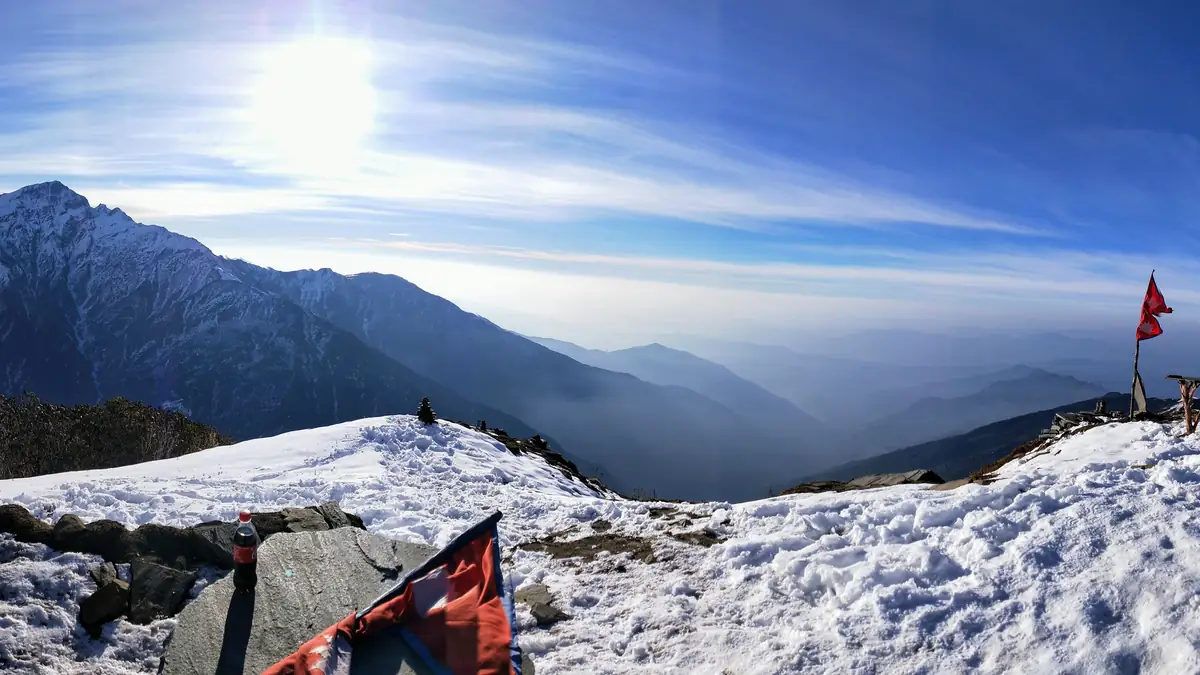
Viewpoint at 4,200 m in winter, view over the sea of cloud

Mardi Himal · Permits, altitude, best time

Permits, the guide rule and the best time: the rules of the Annapurna Conservation Area, altitude in four days and the months when the ridge is clear

The Mardi Himal trek lies in the Annapurna Conservation Area, Nepal's largest: 7,629 square kilometres, designated in 1992, managed by the National Trust for Nature Conservation, which funds itself from entry fees. To go in you need the ACAP permit, a TIMS card and, since April 2023, a licensed guide; the post at Pothana or Dhampus checks. The route itself is young – opened in 2012 after a survey by TAAN, ACAP and NTNC, since built up with lodges to High Camp, and since the boom in domestic tourism after 2015 the most-walked short trek in the region. Here are the rules, the altitude, the gear and the months.

Editorially checked on 26 September 2026Prices as of 26 September 2026Photo: KarnLokesh, CC BY-SA 4.0
The rules at a glance
  • ACAP permitNPR 3,000 per person (foreigners), 1,000 for SAARC nationals, children under ten free; online via the NTNC ePermit portal (plus 2.9% fee), at the counter in Pokhara or Kathmandu, double at the checkpoint
  • TIMS cardNPR 2,000 for foreigners in groups through an operator; issued by the Nepal Tourism Board or TAAN in Pokhara and Kathmandu; passport copy and photo
  • GuideMandatory since 1 April 2023 for foreign trekkers in protected areas; all 38 packages include a licensed guide
  • CheckpointsPothana (starting from Kande) or Dhampus (starting from Phedi), plus Deurali; permit and TIMS are registered
  • AltitudeHigh Camp 3,580 m as the highest sleeping point, viewpoint 4,200, base camp 4,500; in the four-day treks 60 hours from Pokhara to the top

The conservation area: ACAP since 1986, Mardi since 2012

The Annapurna Conservation Area Project began in 1986 as a pilot in Ghandruk, was designated a conservation area in 1992 and at 7,629 square kilometres is Nepal's largest: 1,226 flowering plants, 105 mammals, 523 bird species, among them the danphe, Nepal's national bird, which you may see with some luck in the forest between Forest Camp and Low Camp. Unlike the national parks it is managed not by the state but by the National Trust for Nature Conservation, which receives no regular government funding and finances itself from trekkers' entry fees – that is why the permit costs double if you only buy it at the post.

Until 2012 the Mardi ridge was a route for herders and tented expeditions. That year TAAN, ACAP and NTNC opened the route after a survey; a committee from the village of Sidhing, the Mardi Himal Tourism Trek Management Committee, built the first lodges. In 2018 the Kathmandu Post still described the trail as 'newly opened' with twenty foreign trekkers in a week; after 2015, with the boom in domestic tourism, it grew into the most-walked short trek in the region. In March 2026 ACAP counted 48,513 foreign visitors across the whole Annapurna area – in one month.

Permit, TIMS and guide: what you need and where to get it

Two papers and one person. The ACAP permit costs NPR 3,000 (about 20 euros) for foreigners, 1,000 for SAARC nationals, children under ten are free. It is available online via the NTNC ePermit portal by card with a 2.9 percent fee, at the Nepal Tourism Board counter in Pokhara (Damside) or Kathmandu (Bhrikutimandap) in cash, or at the checkpoint – but there at double the price. The TIMS card from the Nepal Tourism Board costs NPR 2,000 for foreigners, 1,000 for SAARC, and since 2023 is issued only through registered operators; it needs a passport copy, photo and insurance details. The guide has been mandatory since 1 April 2023: the Nepal Tourism Board prescribed licensed accompaniment for foreign trekkers in national parks and protected areas, the Kathmandu Post reported it on 4 March 2023. All 38 packages here include the guide; the operators arrange ACAP and TIMS in advance and need a passport copy and photo for it – Pokhara Adventure, Nomad Mountain Club and Alliance say so explicitly, it applies to the others too.

With 29 of the 38 packages ACAP and TIMS are in the inclusions list. With nine they are missing – Base Camp Hike, Mosaic, Amazing Nepal, Nepal Treks, Heaven Himalaya ('all fees'), Wander Walkers, Trip Pokhara, Adventure Blossom, Shiva Excursion. Ask there; NPR 5,000 is not nothing, but no reason to reject an otherwise suitable package.
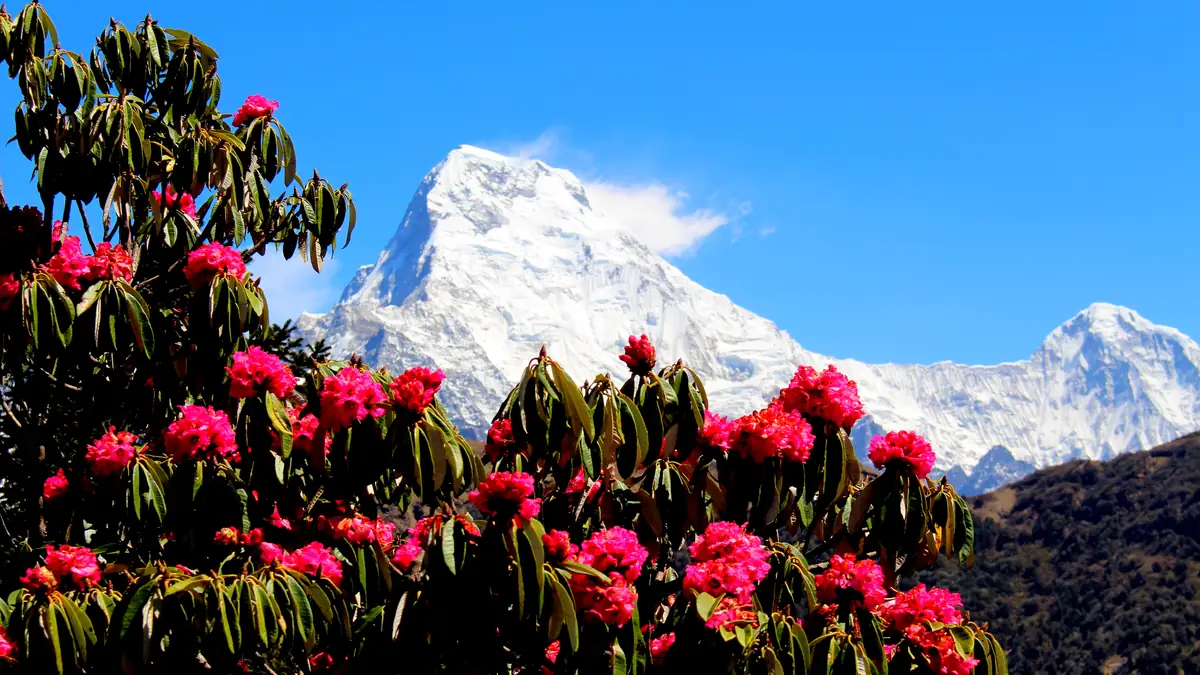
Rhododendron in bloom before Annapurna South in spring
Rhododendron before Annapurna South: from mid-March to late April the forest between Deurali and Low Camp is in bloom – the second reason, besides the views, to go in spring.Photo: Aditya Pal, CC BY-SA 4.0

Altitude: 60 hours from Pokhara to 4,500 m

Mardi is lower than Everest, the Annapurna Circuit and Langtang, but faster than all of them: from Pokhara at 820 m you stand at 4,500 on the third morning in the four-day packages, after 48 hours in the three-day CAN trek. The highest sleeping point is High Camp at 3,580 m – Himalayan Recreation correctly writes that 'adverse health effects at this altitude are common regardless of age and fitness'. The rule of thumb above 3,000 m is 300 to 500 m of sleeping altitude per day; the four-day treks break it on day two (Forest Camp 2,600 to High Camp 3,580), the five-day treks with a night at Low Camp or Badal Danda roughly keep it.

What helps: walk slowly, drink three to four litres, no alcohol at High Camp, and be honest on the summit morning – headache, nausea and dizziness are reasons to turn back, and the viewpoint at 4,200 m is a good place to do it. The all-round packages (Mission Himalaya, Ace, Heaven Himalaya) build in a short fourth day 'because we are above 3,000 m'; Nepal_first sleeps twice at High Camp. The descent is the cure: from High Camp to Siding is 1,800 m in a day. Anyone considering Diamox talks to a doctor first; insurance must cover trekking to 5,000 m and helicopter rescue, a flight from High Camp to Pokhara costs USD 2,500 to 4,000.

Best time: month by month

MonthsWeather on the ridgeForest, track, lodgesVerdict
OctoberClear after the monsoon, 10 to 15 degrees by day at High Camp, around zero at night; best views of the yearTrails dry, lodges full, Dashain holidays mid-OctoberBest time; book ahead
NovemberClear and dry, minus 5 at night at High Camp; ridge windyDry, emptier from the end of the monthBest time
DecemberCold, clear, minus 10 at night; first snow on the ridgeEmpty, frost in the mornings, some lodges closeGood with gear; microspikes for the summit morning
January–FebruaryColdest stretch, minus 10 to minus 15 at night; snow above Badal Danda, base camp often unreachableEmpty, track to Siding icyFor the experienced; viewpoint instead of base camp
MarchMild and mostly clear, around zero at night; residual snow on the ridgeRhododendron begins to bloomVery good
AprilWarm, clear in the morning, haze in the afternoonRhododendron bloom at its peak, forest at its best; lodges fullSecond-best time
MayHot below, cloud from midday, thunderstorms; views only earlyHumid, first leeches in the forestWorks, with an early start
June–SeptemberMonsoon: cloud, rain, views rare; ridge slipperyLeeches, landslides on the track to Siding, some lodges closedNot recommended; 23 September 2026: Met office advises suspending treks

What to bring – and what eight packages lend

A teahouse trek needs no tent and no stove, but a sleeping bag rated to minus ten (the blankets at High Camp suffice in October, not in December), a down jacket for the summit morning, hat, gloves, headlamp, sunglasses and sunscreen for the ridge, sturdy shoes with grip for the descent to Siding, microspikes in winter. Eight packages lend sleeping bag and down jacket: Nepal Wilderness (with poles and microspikes), Mission Himalaya, Heaven Himalaya, Alliance, Ace, Alpine Club, Nepal Treks, Himalayas On Foot 'if necessary'. None of the others do; in Lakeside rental shops charge NPR 100 to 200 a day per item, and Himalayan Recreation writes that the guide helps arrange it. Water: bottles cost NPR 250 up top, tablets or a filter save money and plastic. Cash: no ATM after Pokhara. Poles pay off for the 1,800 m of descent.

Questions about permits and best time

Can I go without a guide?

Officially no longer: since 1 April 2023 the Nepal Tourism Board requires a licensed guide for foreign trekkers in national parks and protected areas, and the TIMS card is issued only through operators. The post at Pothana registers you. In practice solo walkers are still seen on the Mardi ridge; anyone doing it goes without insurance cover and risks being turned back at the post. All 38 packages here include the guide.

Where do I buy the permit if I want to get it myself?

Online via the NTNC ePermit portal by card, or at the Nepal Tourism Board counter in Pokhara Damside, Monday to Friday; passport, one photo, NPR 3,000 in cash. With the packages the operator does it with the passport copy you send in advance.

Do I need microspikes?

From December to February yes, often in March too: the ridge between High Camp and the viewpoint is then under packed snow that is icy in the early morning. Nepal Wilderness provides them; in Lakeside they cost NPR 200 a day or 1,500 to buy. In October and November you do not need them.

How crowded is it?

Busier than ten years ago, emptier than Poon Hill and Annapurna Base Camp. In October and April the lodges at High Camp are full in the evening, you share rooms and dormitories; the guides reserve by phone ahead, which the frames ('bed reservation') explicitly include. In December and May you have the ridge almost to yourself. The Kathmandu Post counted twenty foreign trekkers in a week in 2018; today there are more on a single October day, plus many Nepali guests at weekends.

Sources and check status

Show 13 sources
  1. ntnc.org.np/project/annapurna-conservation-area-project-acap – National Trust for Nature Conservation: ACAP since 1986, conservation area since 1992, 7,629 km², species counts, funding from entry fees (accessed 26 September 2026)
  2. epermit.ntnc.org.np/ – NTNC ePermit: entry NPR 3,000 foreigners, 1,000 SAARC, 2.9% online fee, double at the checkpoint (accessed 26 September 2026)
  3. ntb.gov.np/plan-your-trip/before-you-come/tims-card – Nepal Tourism Board: TIMS card, fees, guide requirement (accessed 25 September 2026)
  4. kathmandupost.com/money/2023/03/04/no-more-solo-treks-guides-mandatory – Kathmandu Post, 4 March 2023: guides mandatory from 1 April 2023 (accessed 25 September 2026)
  5. kathmandupost.com/art-culture/2026/04/25/chiya-kaka-and-the-unfinished – Kathmandu Post, 25 April 2026: opened 2012, Mardi Himal Tourism Trek Management Committee (Sudip Gautam), 48,513 foreign visitors in March 2026 per ACAP (accessed 26 September 2026)
  6. kathmandupost.com/travel/2018/11/30/exploring-mystical-mardi-himal-in- – Kathmandu Post, 30 November 2018: 'newly opened', about 20 foreign trekkers, permit at the Deurali post (accessed 26 September 2026)
  7. kathmandupost.com/travel/2019/06/06/how-to-do-the-mardi-himal-trek-qui – Kathmandu Post, 6 June 2019: camp altitudes, 'steep climbs and descents', waymarking (accessed 26 September 2026)
  8. kathmandupost.com/weather/2026/09/23/avoid-long-distance-travel-from-f – Kathmandu Post, 23 September 2026: Met office advises suspending treks 25–27 September (accessed 26 September 2026)
  9. www.dhm.gov.np/ – Nepal Department of Hydrology and Meteorology: monsoon and dry season (accessed 23 September 2026)
  10. www.gov.uk/foreign-travel-advice/nepal/safety-and-security – UK Foreign Office: trekking in Nepal, insurance, guide requirement (accessed 23 September 2026)
  11. www.viator.com/tours/Gandaki-Zone/Mardi-Himal-Trek/d51906-28592P40 – Himalayan Recreation: altitude note, proof of insurance, gear rental in Pokhara (Viator Partner API) (accessed 26 September 2026)
  12. www.viator.com/tours/Pokhara/Mardi-Himal-Trek/d22291-104921P6 – Nepal Wilderness: sleeping bag to minus 25, microspikes, poles (Viator Partner API) (accessed 26 September 2026)
  13. en.wikipedia.org/wiki/Mardi_Himal – Wikipedia (secondary source): trekking route opened 2012, lodges to 3,550 m, as many domestic as foreign trekkers (accessed 26 September 2026)