- Standard, 10 daysHuaraz → Matacancha 4,200 (drive 5 h) · Cacanan 4,700 → Mitucocha · Carhuac 4,650 → Carhuacocha 4,150 · Siula 4,830 → Huayhuash · Portachuelo 4,750 → Viconga · Cuyoc 5,000 or San Antonio 5,020 → Huanacpatay · Huayllapa 3,500 · Tapush 4,800 → Cashpapampa · Yaucha 4,850 → Jahuacocha 4,050 · rest day · Pampa Llamac 4,300 → Llamac → Huaraz
- Eight daysAndean Summit drops the rest day and one camp day: Matacancha to Llamac in eight days, private, USD 800
- Five days, east sidePeru Expeditions: Matacancha, Carhuacocha, Siula pass, Trapecio 5,000, Santa Rosa 5,070, exit Huayllapa–Cajatambo (USD 750, fee included) · IZI Peru: west and east with a day loop to the Siula pass (899, no refund)
- Minis to Jahuacocha3–4 days: Llamac or Pocpa, Rondoy or Sambunya pass 4,750–4,800, one or two nights at Jahuacocha – Peru Bergsport 3 (550 from 2), IZI Peru 4 (799), First Class Huaraz 4 (800)
- FeesPer village 20–50 soles, the whole circuit ≈ 270–280, the minis 70–150; in the price only with Peru Expeditions
The range: six six-thousanders in thirty kilometres
The Huayhuash lies fifty kilometres south-east of the Cordillera Blanca and is its opposite: not a long range with valleys in between, but a single ridge that the circuit walks around. Yerupajá (6,635 m, Peru's second-highest mountain), Siula Grande (6,344), Jirishanca (6,094), Rondoy, Rasac, Sarapo stand so close together that you see them as a wall from the east side at Carhuacocha and from the west side at Jahuacocha. Siula Grande is the mountain from Joe Simpson's “Touching the Void”; the view of its west face and the lake Sarapococha is the reason for the San Antonio pass. The circuit stays almost always above 4,000 m – the camps lie between 4,050 (Jahuacocha) and 4,400 (Viconga), Huayllapa at 3,500 is the lowest point and the only village – and the passes are not climbing sections but long ascents over pasture and scree. The area has been a Reserved Zone since 2002 but is not a national park: there is no entrance at a gate, only the fees of the eight communities whose grazing land you cross, and the camps are their meadows. Water is at every camp, warm water only at Viconga. Huts, shops, electricity do not exist; what you need for ten days, the donkeys carry.
The stages
Eight sections for both treks from Huaraz; the Huayhuash circuit is the last three: the east side with two passes, the core with Siula, Viconga and the highest pass, and the west side with Tapush, Yaucha and Jahuacocha. Altitudes per Peru Expeditions, Andean Summit and IZI Peru, rounded; under each section it says which packages walk it that way.
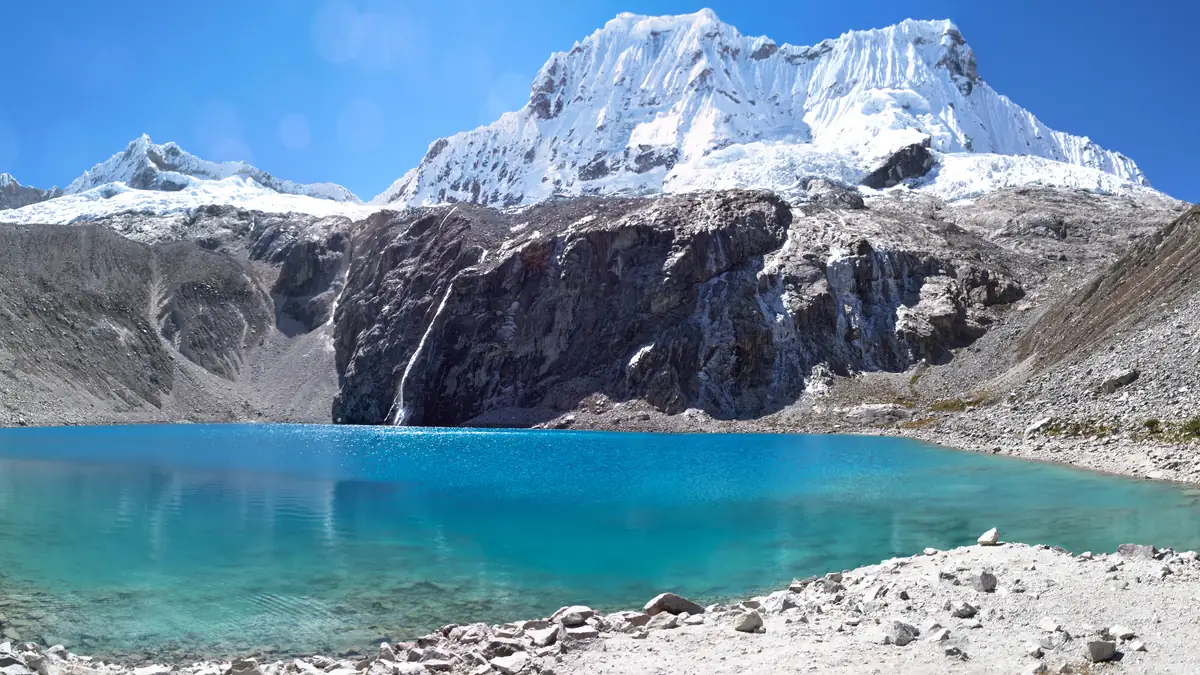
No package includes acclimatisation. Two to three nights in Huaraz and a day walk to 4,600 m – Laguna 69, Laguna Churup or Wilcacocha – belong before every trek.
Huaraz sits at 3,050 m, eight bus hours from Lima. If you arrive on day one and set off on day two, you will have a headache on Punta Unión and a problem in the Huayhuash: both treks sleep at 3,750 to 4,200 m from the first night and climb above 4,750 on the second or third day. The usual preparation is two nights in town and a day trip: Laguna 69 below Chacraraju (bus to Cebollapampa 3,900, three hours up, two down), Laguna Churup above Pitec (4,450 m, steep, with a rope on a rock step) or the easier Wilcacocha in the Cordillera Negra with a view of the whole White Range. For the Huayhuash the operators recommend three days; Peru Expeditions puts Laguna Churup before its 14-day version, First Class Huaraz puts Laguna 69 into the Alpamayo circuit. All other packages begin on the trek morning at the hotel door.
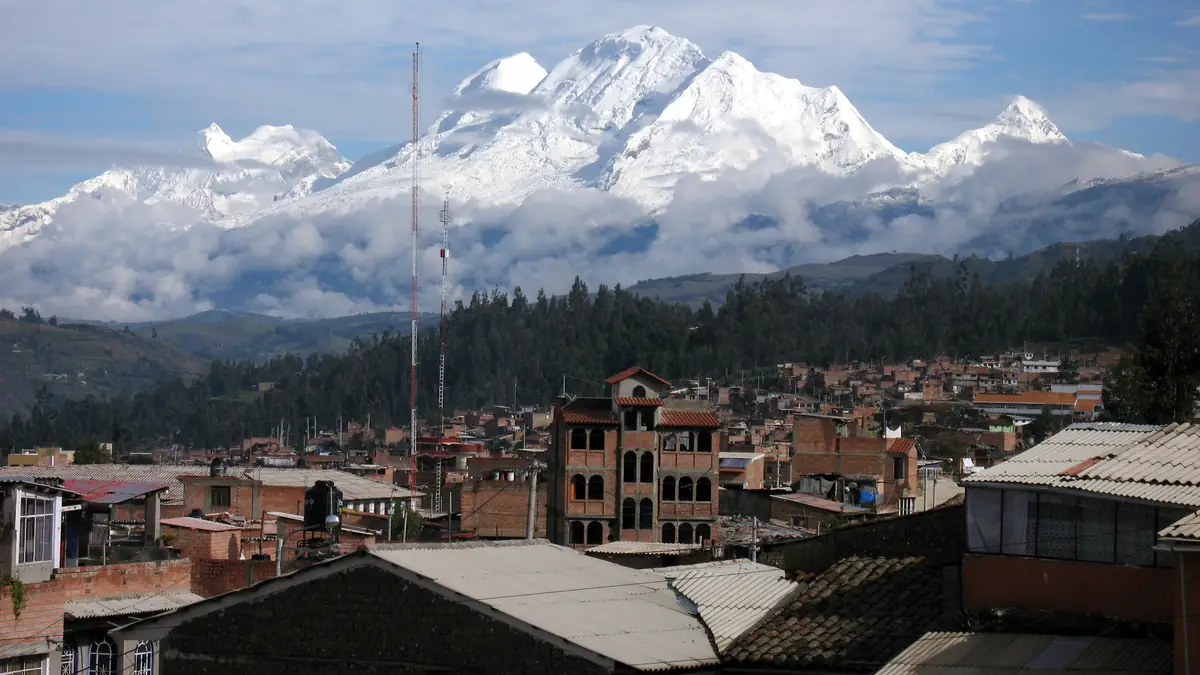
Three hours' drive through the Callejón de Huaylas to Caraz and up to Cashapampa, then the entry into the Quebrada Santa Cruz: a gorge that opens into a valley.
All packages walk the trek from Cashapampa to Vaquería, that is anticlockwise: the climb to the pass is longer that way but gentler, and the Portachuelo at the end is a road. At the checkpoint in Cashapampa the park ticket is checked (foreigners 60 soles for two to three days, 150 from four – almost all packages exclude it). The first hours are a narrow gorge by the river, then the valley widens to the pasture of Llamacorral at 3,750 m, the first camp. The donkeys go ahead, the kitchen tent stands on arrival; if you book with Peru Expeditions or Peru Bergsport you share the camp with other groups.
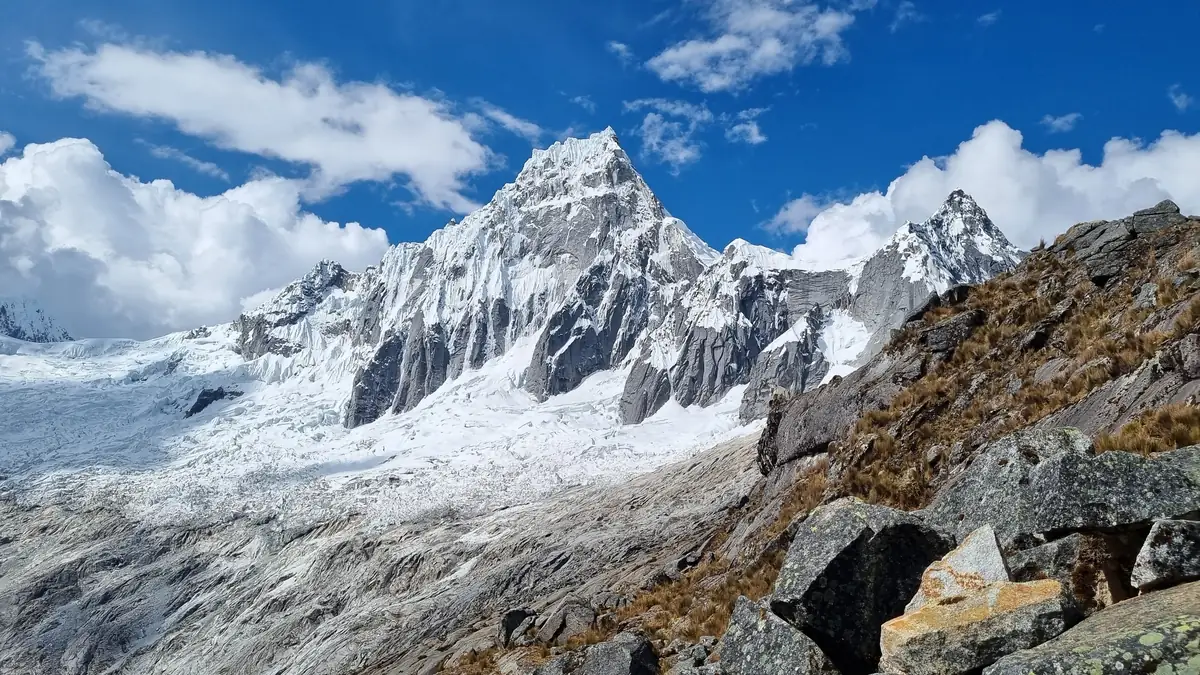
The long day in the valley: two lakes, the side trip to the Alpamayo base camp at Laguna Arhuaycocha and the camp below Taulliraju.
In the morning along Laguna Ichiccocha and the long Jatuncocha, then the turn-off north: the side trip to Laguna Arhuaycocha below the Alpamayo south face (two to three hours there and back, view of the mountain Peru declared the most beautiful in the world) is in the itineraries of Peru Bergsport, Turismo Exploring and IZI Peru; Peru Expeditions and Scheler Artizon do not name it. The Taullipampa camp lies at 4,250 m on a meadow directly below Taulliraju (5,830 m), whose glacier can be heard at night. It is the coldest night of the trek – the sleeping bag should be rated to minus five; Scheler Artizon and Peru Bergsport provide it, the others rent it in Huaraz.
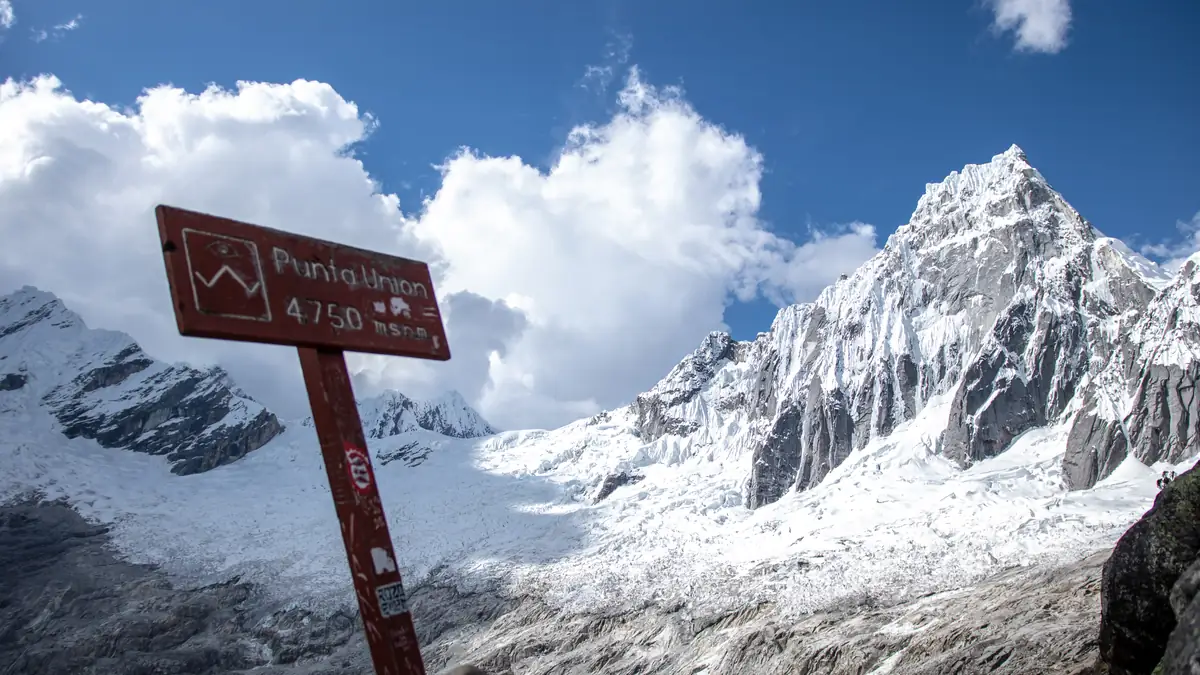
Three hours of switchbacks to Punta Unión, a notch in the ridge with a sign, glacier lakes on both sides and Taulliraju within reach – then the long descent into the Huaripampa valley.
The path to the pass is well built, but the air at 4,750 m is the reason for the acclimatisation beforehand. At the top a narrow gap in the rock, behind it the view over Laguna Taullicocha and the peaks of the Cordillera Blanca to Huascarán. The descent passes lakes through moraines and then down pasture to Cachinapampa or Huaripampa at about 3,750 m, where the third camp stands – Peru Expeditions and Peru Bergsport write Huaripampa, Scheler Artizon, Turismo Exploring and IZI Peru Cachinapampa; they are meadows in the same valley, an hour apart.
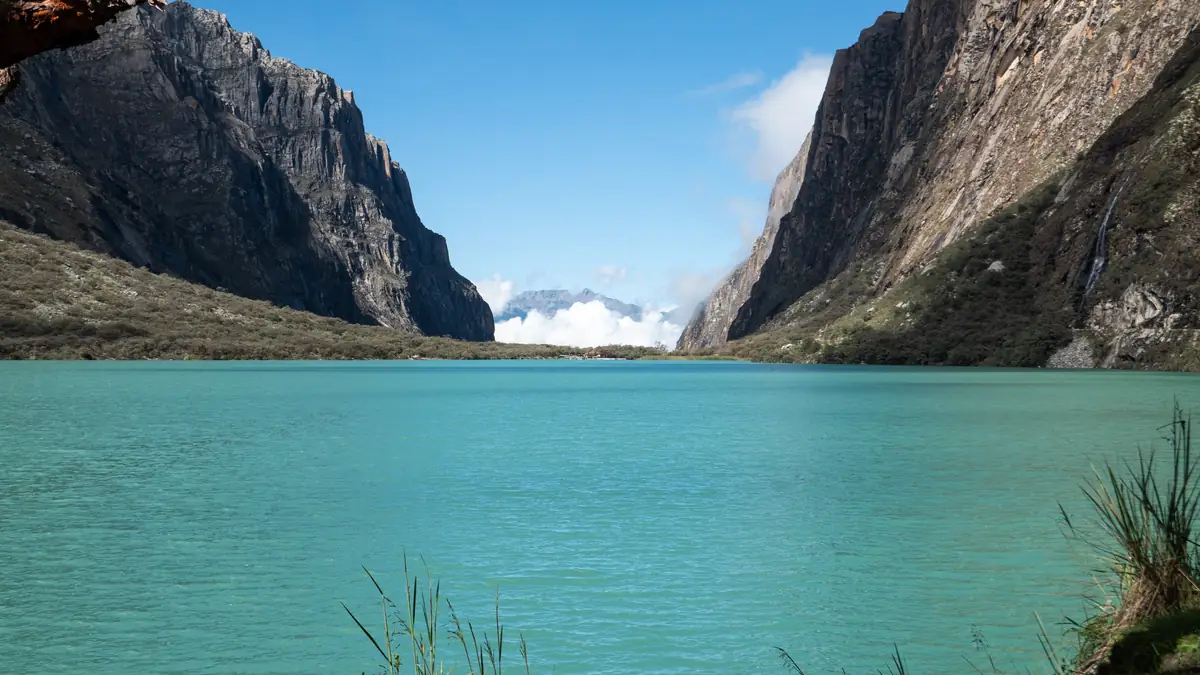
A short morning through queñua forest and villages to Vaquería, then the drive over the highest point of the journey, the Portachuelo at 4,767 m, down to the turquoise Llanganuco lakes.
The last walking day is the easiest: through the forest of red-barked queñua trees, past fields and the hamlet of Huaripampa to the road at Vaquería, where the vehicle waits. The drive back is a programme in itself – the track winds up to the Portachuelo de Llanganuco, with Huascarán, Huandoy and Chopicalqui on both sides, then drops to the two Llanganuco lakes, whose colour comes from glacier flour. Arrival in Huaraz in the late afternoon; the last dinner is expressly not included with Scheler Artizon. If you want to extend the circuit, head north from Punta Unión: the Alpamayo circuit by Peru Expeditions, Peru Bergsport and First Class Huaraz takes eleven to thirteen days over seven more passes to Hualcayán.
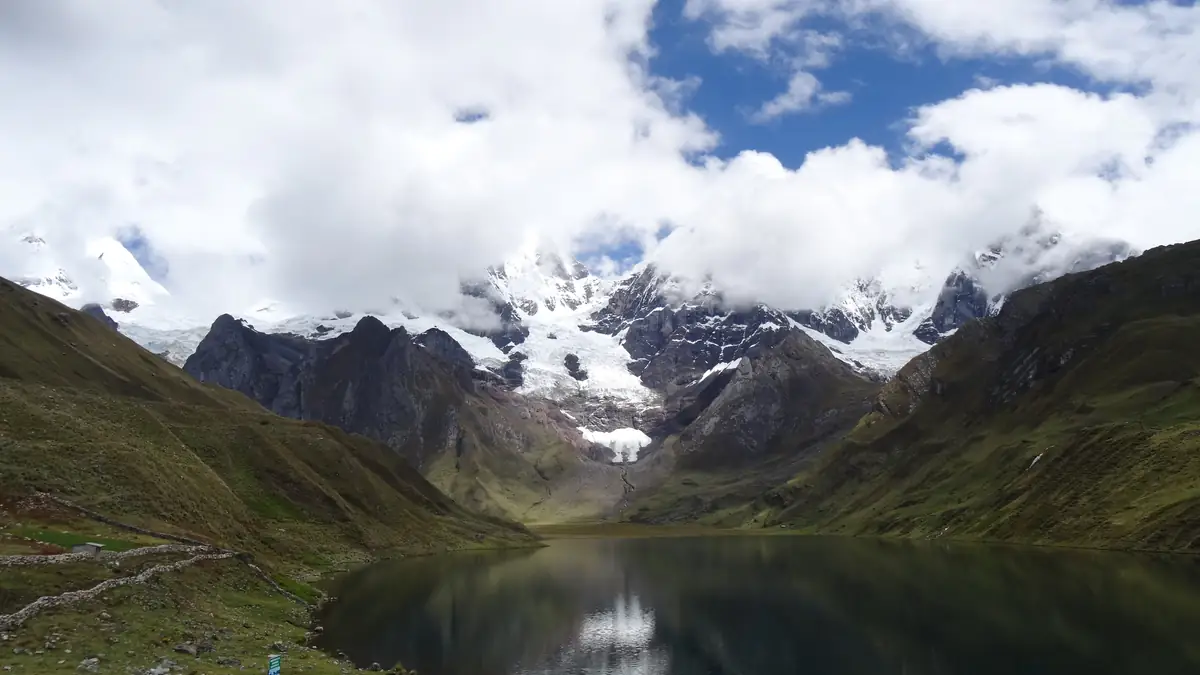
Five hours' drive via Chiquián to Llamac and the Matacancha camp, then two passes on two days to Laguna Carhuacocha, the camp with the view of Yerupajá, Siula Grande and Jirishanca.
The Huayhuash circuit begins where the road ends: Peru Expeditions, Andean Summit and IZI Peru drive to Matacancha (Cuartelhuain) at 4,200 m and start there; Peru Bergsport and First Class Huaraz walk from Llamac or Pocpa, which costs a day more. On the first walking day over the Cacanan pass (4,700 m) to Laguna Mitucocha below Jirishanca, on the second over the Carhuac pass (4,650) to Carhuacocha. In Llamac, Pocpa and Queropalca the communities collect their fees – 20 to 50 soles per village, around 270 to 280 for the whole circuit; Peru Expeditions has them in the price, Andean Raju, Andean Summit, First Class Huaraz and IZI Peru do not. The camps are meadows with tent, kitchen tent and, with Andean Raju, a toilet tent; there are no huts.
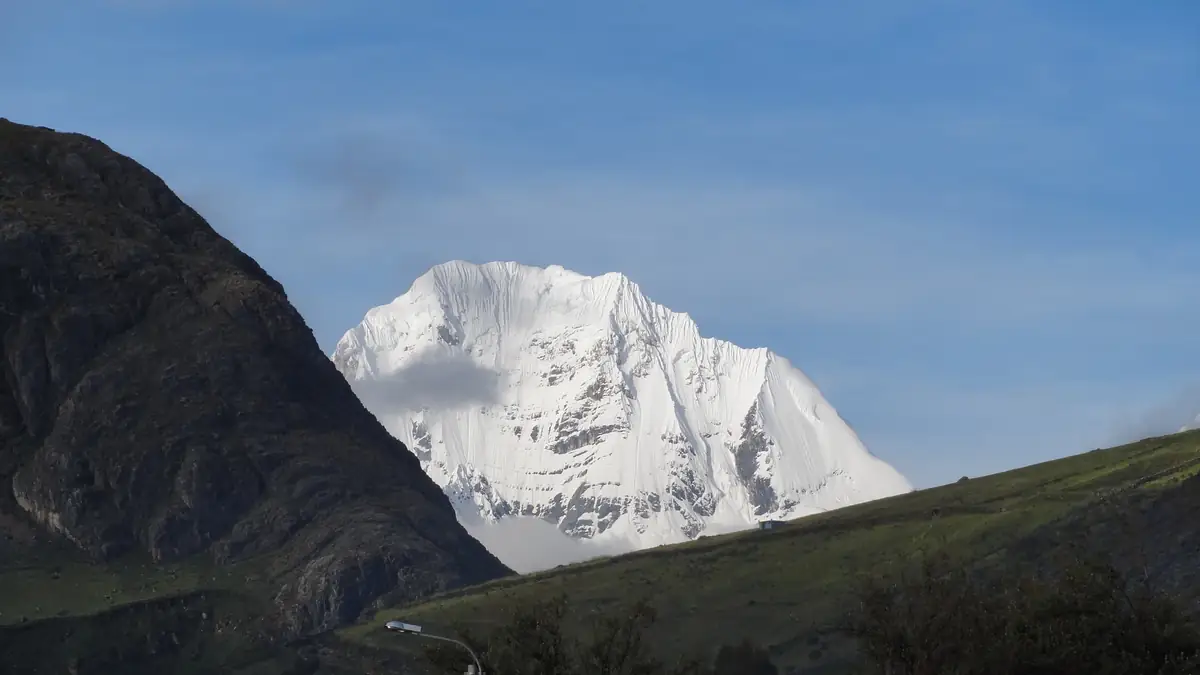
The core of the circuit: the three lakes below the Siula face, the Siula pass, the hot springs of Viconga and the highest pass – Cuyoc or, for the view, San Antonio at 5,020 m – before the descent to the village of Huayllapa.
From Carhuacocha the trail climbs past the three lakes Gangrajanca, Siula and Quesillococha, the viewpoint that every Huayhuash photo shows, to the Siula pass (4,830 m) and down to the Huayhuash camp. Day four over the Portachuelo de Huayhuash (4,750) to Laguna Viconga with the thermal pools, the only warm water of the circuit. Day five is the highest: Peru Expeditions, Andean Summit and Peru Bergsport go over the Cuyoc pass (5,000 m), Andean Raju names Sarapococha, that is San Antonio (5,020), with the view of Siula Grande and Sarapococha, the place from “Touching the Void” – steeper, looser, only in good weather. Camp in the Huanacpatay valley, on day six the descent to Huayllapa at 3,500 m, the only village on the route, with a shop and community fee. The five-day version by Peru Expeditions cuts off here: after the Siula pass over Trapecio (5,000) and Santa Rosa (5,070) straight to Huayllapa and Cajatambo.
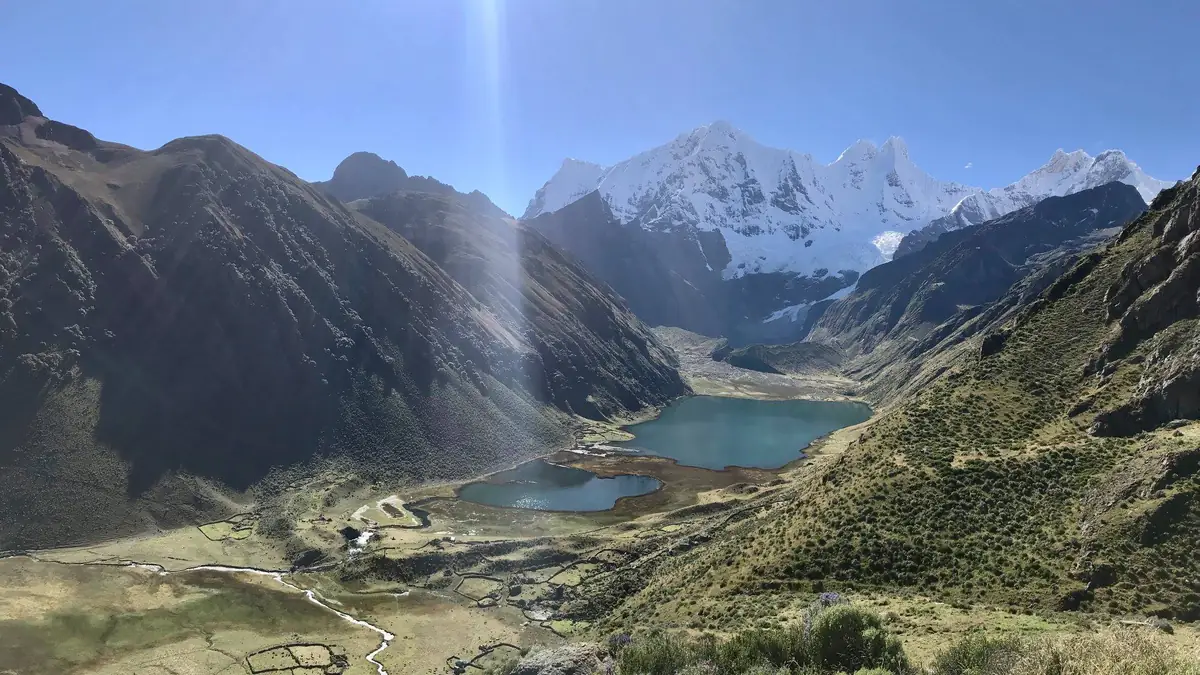
Two passes back to the west side, then Laguna Jahuacocha below Yerupajá and Jirishanca – the finest camp of the circuit, with a rest day on the ten-day versions – and the exit to Llamac.
From Huayllapa 1,300 m up over the Tapush pass (4,800) to the Cashpapampa or Huatiac camp, the next day over the Yaucha pass (4,850) with the last big view of the main range down to Laguna Jahuacocha at 4,050 m. The ten-day versions by Peru Expeditions, Peru Bergsport and First Class Huaraz stay here two nights; with Peru Expeditions the free day is meant for Diablo Mudo (5,350 m, glacier summit with crampons, surcharge). On the last day over the Pampa Llamac (4,300) down to Llamac or Pocpa and five hours back to Huaraz. The mini versions by IZI Peru, First Class Huaraz and Peru Bergsport walk only this section: from Llamac over the Rondoy or Sambunya pass to Jahuacocha and back, three to four days, with the same view of Yerupajá and without the 5,000-metre passes.
The route in stages: altitudes and itineraries from the operator data, photos illustrate the places. The boxes show where the four compared offers differ at the same spot.
The community fees: eight villages, around 270 soles
Since the villages began securing the circuit themselves after robberies in the 2000s, every community collects for passage over its land, in cash, with a receipt, usually at the camp or at a post on the trail. The rates for 2026 per huayhuash.com: Llámac 50 soles, Pocpa 20, Queropalca 40, Quisuarcancha 30, Túpac Amaru 30, Uramaza 30, Huayllapa 50, Pacllón 30; if you go via Cutatambo you pay 10 more there. The whole circuit thus costs around 270 to 280 soles (about 70 euros), a mini from Llamac to Jahuacocha 70 to 100, the five-day east side from Matacancha 150 to 200. Peru Expeditions has the fees in the price on all three Huayhuash products – on the five days expressly 250 soles; Andean Raju, Andean Summit (“200–250 soles”), First Class Huaraz and IZI Peru (“70 soles”) exclude them, Peru Bergsport does not mention them. The figure “2,800 soles” with Andean Raju is a typo, the dollar figure next to it (85) is right. Keep the receipts: the next post asks for them, and anyone arriving without pays twice. The fees are the reason the circuit is safe – the villages post guards at the camps – and they are the only money that stays in the valleys.