- BeforeAt least two nights in Cusco (3,400 m), better three, including a day in the Sacred Valley (2,800) and a walk at 3,700 (Sacsayhuamán) – Salkantay Trekking requires two days for the two-day tour, three for the three-day tour
- On the dayWalk slowly, drink every twenty minutes, coca tea before the start, no alcohol the evening before, a light breakfast; anyone with a headache, nausea or dizziness says so and turns back
- AidsOxygen is carried by 24 of the 32 products (briefly, for emergencies, no substitute for acclimatisation) · horse to twenty minutes below the ridge, 80–120 soles cash · coca leaves and sorojchi pills from the pharmacy in Cusco
- ColdMinus five to minus ten degrees on the ridge in the morning from May to August, wind, then sun with UV like nowhere else; rain and snow December to March
- Best timeMay to September dry and colourful · April and October transition, few people · December to March rain, snow on the colours, mud on the track
What 5,000 m does to the body
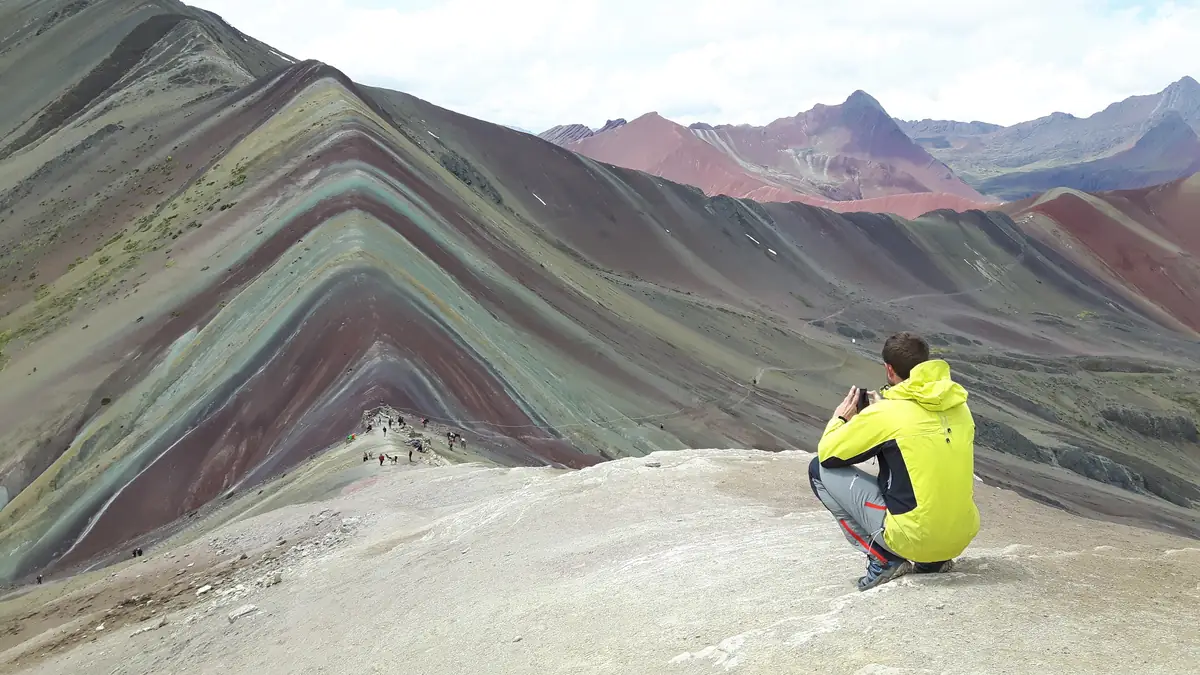
At 5,036 m the air pressure is half that at sea level; every breath brings half the oxygen. The body compensates by breathing faster and, over days, producing more red blood cells – over days, not hours. If you fly from Lima (sea level) to Cusco (3,400) and board the bus at four the next morning, you lack that compensation, and the climb from 4,700 to 5,036 becomes what Andina Expeditions calls “strenuous” and what turns up in reviews as “worst day of my life”. The symptoms of mild altitude sickness are headache, nausea, loss of appetite, dizziness, poor sleep; they begin six to twelve hours after arriving at altitude – that is, exactly during the drive and the climb. The severe form (pulmonary or cerebral oedema) is rare on a single day at 5,000 m but not impossible; coughing up foam, confusion, unsteady walking mean: down at once, and the guide must decide that, not the guest.
What helps: time. Two nights in Cusco before the trip is the minimum almost all operators name (Andina “48 hours”, exploor “24 hours”, Salkantay Trekking two to three days); three nights with a day in the lower Sacred Valley and a climb to 3,700 to 4,000 m (Sacsayhuamán, Moray, Chinchero) are better. On the day itself: walk slowly – the guide sets the pace, and the slowest arrive at the top just the same –, drink a lot, coca tea or coca leaves (everywhere in Cusco, legal, mild), eat lightly, no alcohol the evening before. Acetazolamide (Diamox) helps with acclimatisation if you start two days before; sorojchi pills from the pharmacy are aspirin with caffeine and take away the headache, not the cause. Oxygen from the guide's bottle brings two minutes of relief and is meant for emergencies, not for the climb.
Horse, oxygen, turning back: what the operators provide
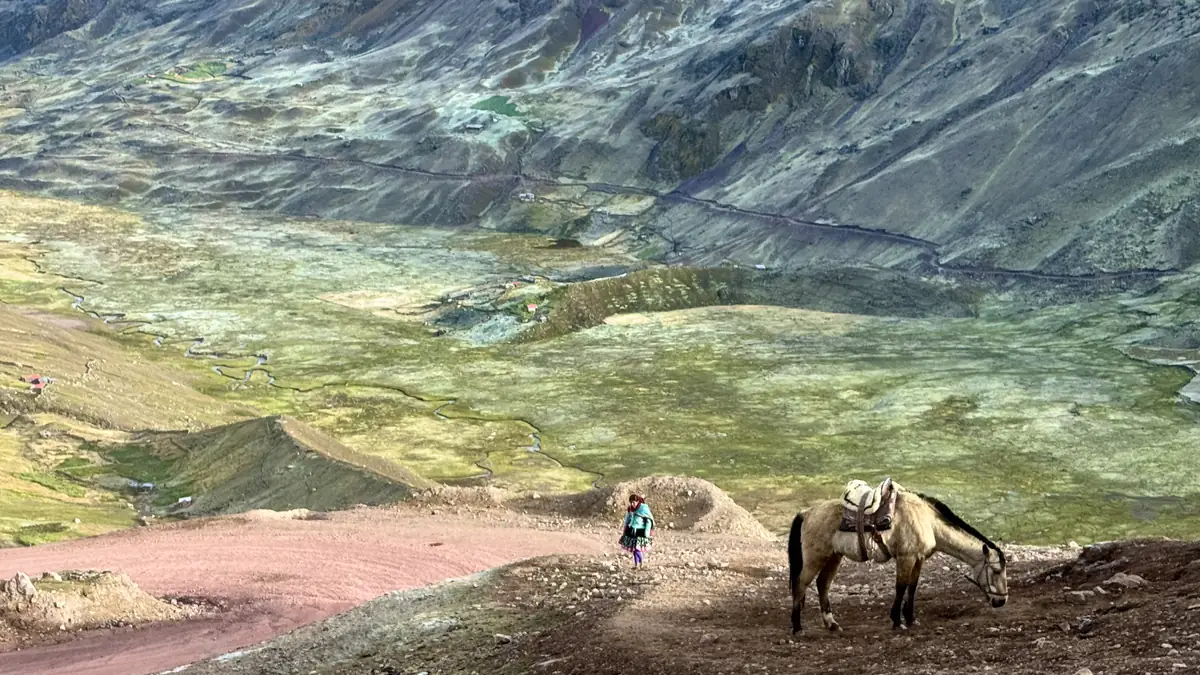
The horse waits at the car park, led by people from the communities of Pitumarca and Cusipata, and is not in the package – with none of the 32 products. Peru Private Tours names 80 soles uphill and 120 return, Andina 90 soles, Inka Altitude USD 25 and Crossover USD 35; Machu Picchu Tours advises negotiating the price. It takes you to about twenty minutes below the ridge; the last bends everyone walks, and there many notice that the horse does not take away the altitude. If you are unsure, take the horse up and walk down. Oxygen is carried by almost all guides (Chullos “oxygen assistance”, Peru Private Tours “in the car and on the trail”, TreXperience “tank”); it is for those who turn pale at the top and for the drive back. Turning back is no disgrace and happens in every group; the bus waits at the car park, and the guides of Peru Private Tours and TreXperience stress that everyone walks at their own pace. If you have the worry beforehand, book Palccoyo: 40 minutes flat at 4,900 m, without the climb.