- FitnessEleven days of 5–8 hours, 500–800 m of ascent, with a daypack of 5–8 kg; if you walk 15–20 km with 800 m of ascent in a day and again the next, that is enough
- AltitudeNoticeable from Namche (3,440 m), decisive from Dingboche (4,410 m): six nights above 4,400 m, two above 5,100 m; Kala Patthar 5,545 m
- AcclimatisationTwo rest days (Namche, Dingboche) with climb and return – documented with 12 of 19 products, no itinerary in the data with six
- Altitude sicknessHeadache, nausea, sleeplessness are normal; confusion, breathlessness at rest, unsteady gait mean descent – immediately, with the guide
- InsuranceHelicopter rescue to 6,000 m mandatory with almost all operators; Ace, Alpine Ramble, Outfitter “arrange” the rescue, the insurance pays for it
The path: long, not hard
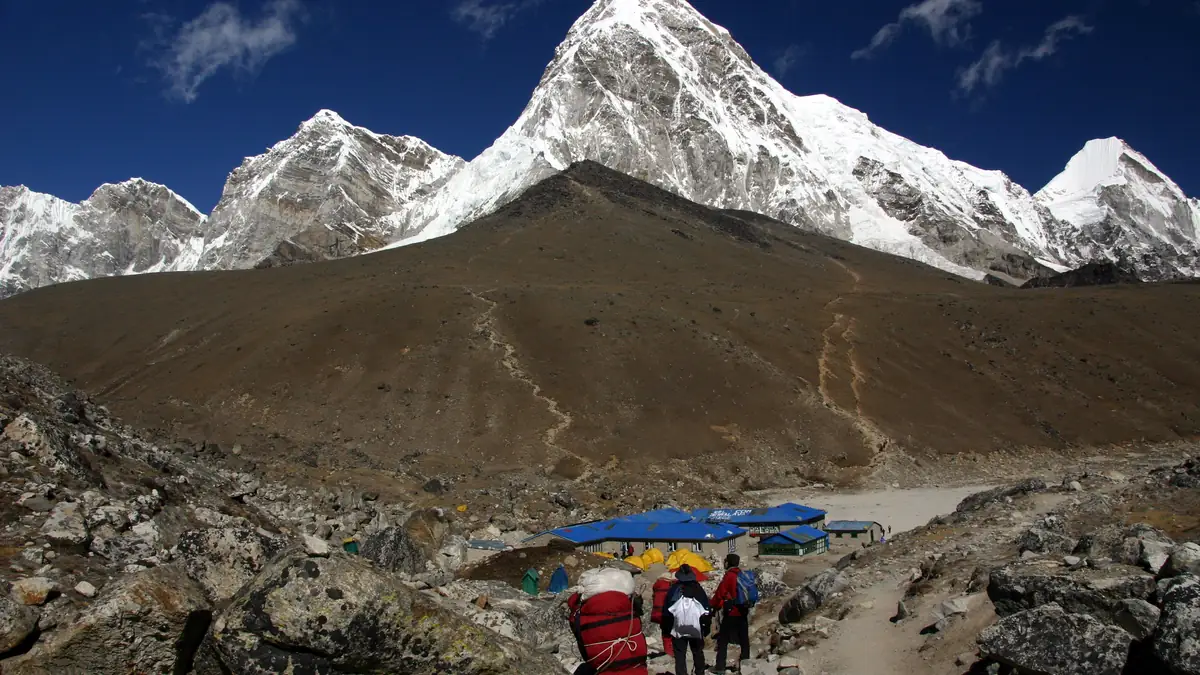
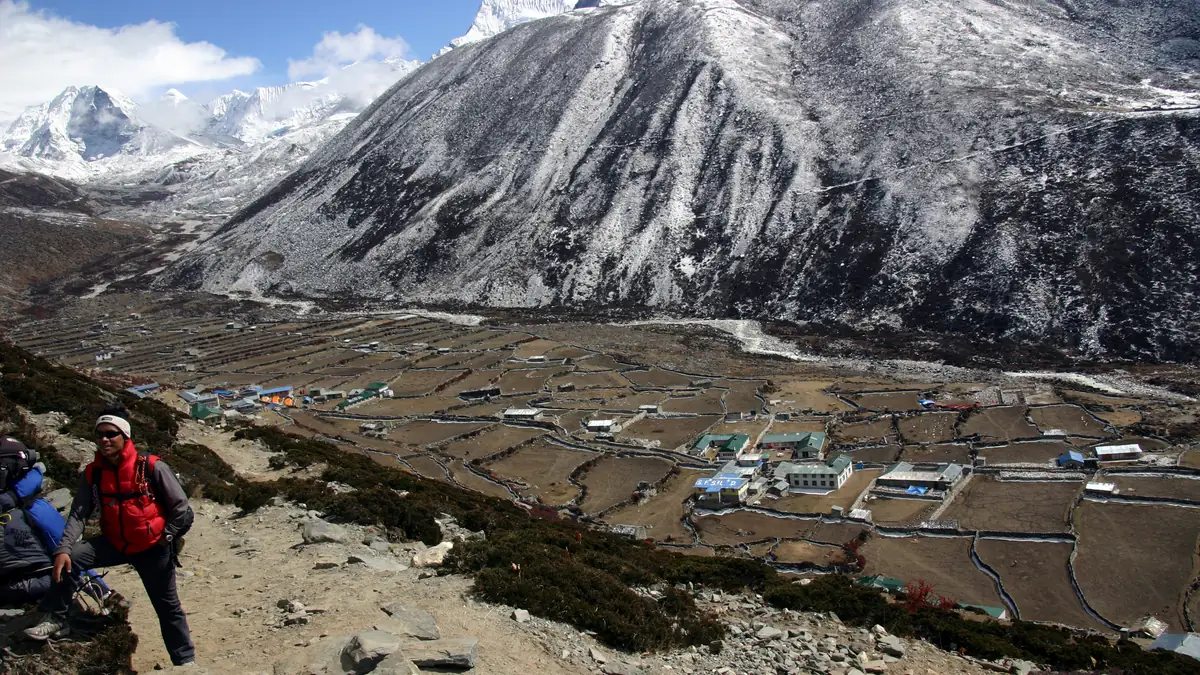
The trail through the Khumbu is the most walked in Nepal, wide enough for yak caravans, with stone steps on the steep sections and suspension bridges over every gorge. Daily stages are between five and eight hours, ascent between 400 m (Tengboche–Dingboche) and 800 m (Phakding–Namche). Two days are hard: the base camp day with seven to eight hours over rubble and glacier moraine above 5,000 m, and the Kala Patthar day, which begins before sunrise with 400 m of ascent and ends with 1,300 m of descent to Pheriche. Accessible Adventure gives the kilometres per day: 8, 10.5, 6, 10, 11, 4.5, 8, then 12 and 19 and 18.5 – around 130 in total.
If you go on mountain hikes regularly at home, you have the fitness. If not, start three months ahead: long walks with a rucksack, stairs, two days in a row. The trek does not need strength, it needs endurance – and the ability to walk slowly when the guide says so.
Altitude: what happens, and what the operators do about it
At 5,000 m every breath contains half as much oxygen as at sea level. The body needs days to produce more red blood cells, and the route gives it those days: never more than 500 m of sleeping altitude gained per day, two rest days with “climb high, sleep low” – in Namche to the Everest View Hotel (3,880 m), in Dingboche up Nangkartshang (5,083 m) or into the Chhukung valley. Even so, almost everyone has headaches from Dingboche, sleeps badly and eats less. That is mild altitude sickness, and it is normal.
It becomes dangerous when the symptoms do not improve after a night or when new ones appear: confusion, staggering, coughing with breathlessness at rest. Then the only step is descent, immediately, even at night, even 500 m. The guides know this; Scenic, Unique, Accessible and Ace Heli measure with the pulse oximeter, Alpine Ramble and Accessible have Diamox in the kit. Diamox (acetazolamide) speeds up adaptation and is taken preventively by many – that is discussed beforehand with a doctor, not with the guide. If you have had altitude sickness before or are over 45, get checked before you go.