- Best monthsJanuary, February, early March (warm, clear, some snow up top) · July to October (cool, dry, busy)
- AvoidApril and May: long rains, mud up to Shira, snow from Barafu, cloud on the summit · November: short rains, briefer, unpredictable
- In betweenJune and December: transition, often good, few groups
- Full moonSummit night without a headtorch, but full camps – operators schedule departures around it
- PricesEight of nine products cost the same all year; African Trek charges USD 100–200 more on Saturdays
Weather by zone: one mountain, five climates
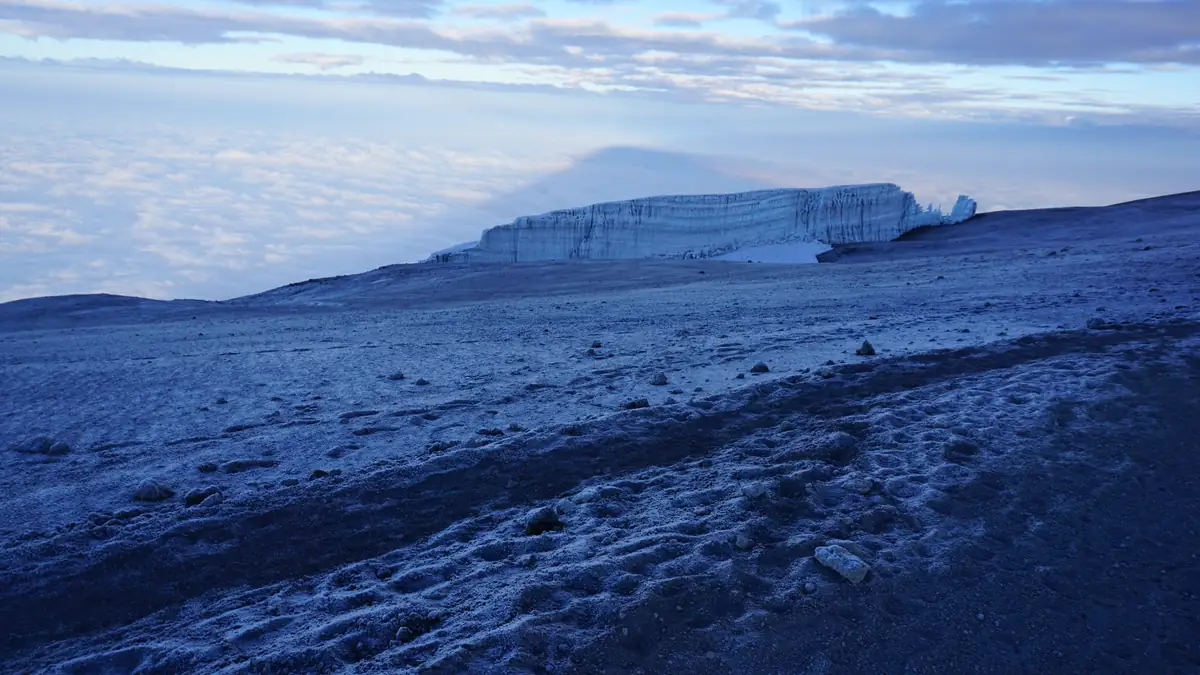
The mountain starts in coffee plantations at 30 degrees and ends on glaciers at minus 20; in between lie rainforest, heath, alpine desert and the summit zone. The weather changes more with altitude than with the month: in the rainforest it rains in the afternoon in every season, only in the rainy season also in the morning. On the Shira Plateau and above 4,000 m it is almost always dry and below zero at night. At the summit there is snow on the scree in the dry season, fresh snow down to Barafu in the rains – then the summit night gets slower and colder.
What the season changes is the visibility. January to March and July to October show Kibo clear in the morning, in cloud in the afternoon; from April to May the mountain hangs in fog for days, and the summit night ends inside a cloud. The success rate does not drop in the rainy season because of the wet but because fewer people go and the trails are empty.
Month by month
| Months | Weather | Crowds | Verdict |
|---|---|---|---|
| January – February | warm, dry, clear mornings, snow possible on the summit | high | best time alongside September |
| March | first showers from mid-month | medium | early March good, late March risky |
| April – May | long rains, mud, snow from 4,500 m | low | avoid; those who go have the mountain to themselves |
| June | cool, drying out, few clouds | low to medium | good time for quiet camps |
| July – August | cold, dry, clear | very high | peak season, camps full |
| September – October | dry, a little warmer, clear | high | best time alongside January |
| November | short rains, brief showers | low | unpredictable but doable |
| December | drying out, Christmas busy | medium to high | good from mid-December |
Experience values, not weather statistics. The park is open all year.
Full moon: the summit night without a headtorch
Many operators schedule group departures so the summit night falls on the full moon: the scree slope then lies in moonlight, the glaciers glow, and the headtorch stays off. The price is the fullest camps of the month and a string of groups on the slope. If you want the moon, start from Barafu three to four days before full moon; if you want quiet, go a week later. The Viator products are private tours or small groups with daily departures – the moon is a question of the date, not an option.
How cold does it really get?
By day in the rainforest 20 to 30 degrees, on the Shira Plateau 10 to 20, at Barafu Camp around zero. At night in the tent: Shira around freezing, Barranco and Karanga down to minus five, Barafu down to minus ten. On the summit night at the crater rim minus ten to minus twenty, with wind chill below that – that is the hour the down jacket, the two pairs of gloves and the thermos are for. July and August are the coldest months, January and February the mildest; the difference at the summit is smaller than the difference between a night with and without wind.
Questions about timing
Can I climb in the rainy season?
Yes, the park is open and the operators go. Expect mud up to the heath, wet tents, fresh snow at the summit and little visibility. The upside is empty camps and the same prices. Gaiters, a rain cover for the duffel and a second pair of shoes are then mandatory.
Is Christmas a good time?
Weather-wise yes – the short rains are usually over, the January sky is starting. Between 20 December and New Year the camps are as full as in August, though, and flights to Kilimanjaro cost double.
Can I combine Kilimanjaro with a safari?
The operators from Moshi and Arusha all offer follow-on safaris in the Serengeti and Ngorongoro; ZARA mentions it explicitly. On Viator these are separate products. Order: mountain first, then safari – your legs will thank you.
Sources and check status
Show 4 sources
- www.tanzaniaparks.go.tz/ – TANAPA: Kilimanjaro National Park, open all year (accessed 25 September 2026)
- www.viator.com/tours/Moshi/Mount-Kilimanjaro-Marangu-Route-5-days/d241 – ZARA Tours: notes on rain and mud in the rainforest, gaiters (accessed 25 September 2026)
- www.viator.com/tours/Moshi/Tanzania-Wildlife-Safari-and-kilimanjaro-cl – African Trek: Saturday prices (USD 2,700–2,800) (accessed 25 September 2026)
- docs.viator.com/partner-api/ – Viator Partner API: prices without seasonal tiers for eight of nine products (accessed 25 September 2026)