- PermitInca Trail: state quota, personal, often gone four to six months ahead · Salkantay: no permit, only the Machu Picchu ticket
- AltitudeInca Trail: Dead Woman's Pass 4,215 m · Salkantay: Abra Salkantay 4,630 m
- SceneryInca Trail: Inca ruins, paved paths, cloud forest · Salkantay: glacier, mountain lake, pass, cloud forest, coffee
- ArrivalInca Trail: on foot through the Sun Gate Inti Punku · Salkantay: hotel night in Aguas Calientes, bus up in the morning
- CampsInca Trail: tents carried by the company · Salkantay: fixed camps with huts or domes
- ClosureInca Trail closed in February · Salkantay year-round
- List prices 4–5 daysInca Trail USD 835–840 (Alpaca, TreXperience) · Salkantay classic USD 695–760 (Salkantay Trekking)
Permits and lead time: why many end up on the Salkantay
The classic Inca Trail is the only route to Machu Picchu for which the Peruvian state issues a daily quota of permits – for hikers and crew together. Permits are personal, bought with your passport number and non-transferable. In the high season from May to September they are often gone four to six months ahead. If you want to hike in February you have no choice: the Inca Trail is closed that month for maintenance.
The Salkantay has no such quota. The only scarce item is entry to Machu Picchu itself – and both routes need that. Salkantay Trekking puts it honestly: circuit 2 only when booked about five months ahead, otherwise circuit 3, then 1. So if you are late, the Salkantay still has a place for you; the Machu Picchu ticket then only decides your route through the site, not your access.
Altitude, scenery and demands
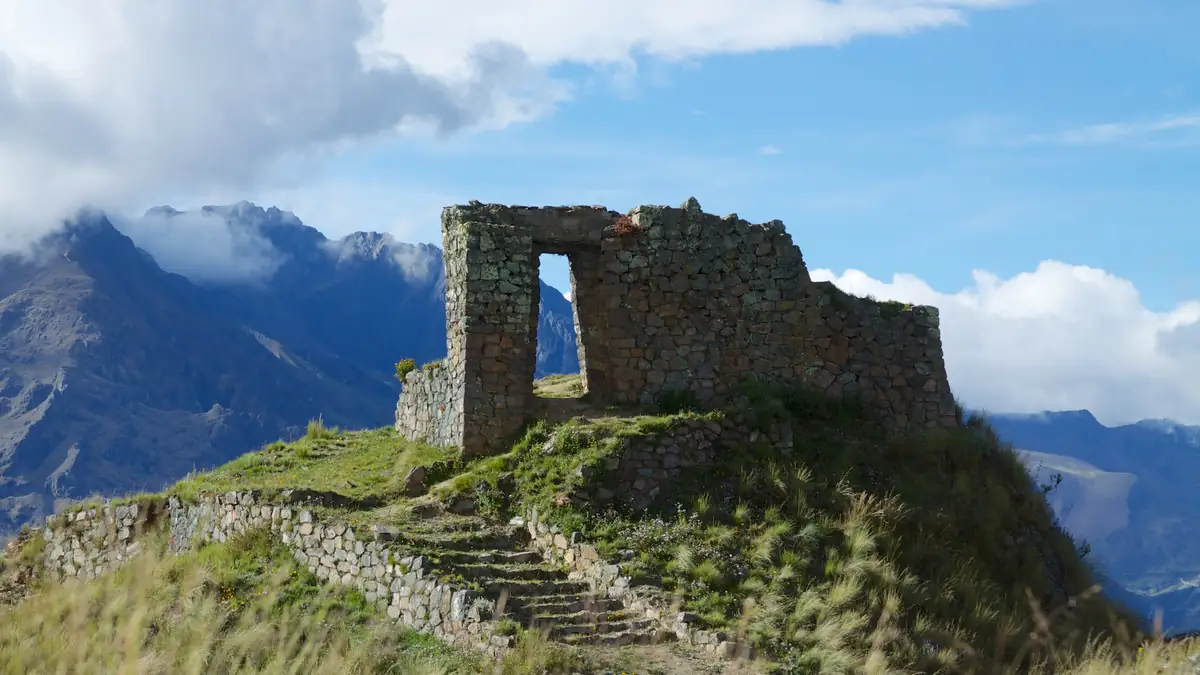
The Inca Trail climbs to Dead Woman's Pass at 4,215 m on day two, then drops past ruins and stairways and reaches the Sun Gate Inti Punku on the fourth morning, from where you see Machu Picchu for the first time. The path is original paving for long stretches; the stairs are the challenge, not the altitude.
The Salkantay climbs to 4,630 m on day two – a good 400 m higher than the Inca Trail – and drops 1,700 m the same day. Instead of ruins it offers the Salkantay glacier, Humantay Lake, the transition from highland to cloud forest with coffee and banana plantations and, on day four, Llactapata with the view of Machu Picchu from across the valley. Ruins en route: only Llactapata. Altitude: more. Variety of scenery: more. Historic substance of the path: less.
How you arrive at Machu Picchu
This is the difference many underestimate. On the Inca Trail you enter Machu Picchu on foot through the Sun Gate, usually early on the morning of day four, with the group you have walked with for three days. On the Salkantay the walking ends in Aguas Calientes; you sleep in a hotel, shower, eat in a restaurant and take the bus up the next morning – like every other day visitor. The guided tour is the same, the arrival is not.
Both routes end with the train to Ollantaytambo and the transfer to Cusco; the compared Inca Trail products include the bus down and the train (TreXperience: Vistadome or 360°; Alpaca: Expedition, with Vistadome for bookings from March 2026 per the operator data – a statement that contradicts itself in the data and needs clarifying before booking).
Comfort: tents versus fixed camps
On the Inca Trail you sleep in tents that porters pitch at the state-designated campsites; toilets are the campsite toilets or the company's own chemical toilet (Alpaca lists a “portable chemical toilet only for our groups”). Porters carry tent, kitchen and up to 7 kg of your things.
On the Salkantay the camps are the operators' fixed installations: glass-roofed huts at Sky Camp, domes in the jungle, permanent dining rooms, in part electricity and hot showers (Machu Picchu Expeditions excludes “hot shower”, Salkantay Trekking does not mention them). Horses carry 5 to 10 kg of your things. The last night is a hotel with all four Salkantay products.
Budget: close together once everything is in
The two Inca Trail products from our Inca Trail comparison are listed at USD 840 (TreXperience, 4 days) and USD 835 (Alpaca Expeditions, 4 days); both include Machu Picchu entry, porters up to 7 kg, a private toilet and the train back – only TreXperience expressly lists the permit. Sleeping bag, mat and poles are rental gear with both. Salkantay Trekking's classic versions at USD 695 and 760 sit at a similar level and include ticket, hotel night and return train. The difference in total budget is under USD 100; what decides is permit availability, month of travel and how you want to arrive – not the price.
The Inca Trail products are candidates here, not recommendations: with TreXperience a general exclusion of “entrance fees” contradicts the included tickets, with Alpaca the train class is stated twice. We resolve both before this becomes a separate Inca Trail page.
Both routes side by side
| Criterion | Inca Trail (classic, 4 days) | Salkantay (classic, 5 days) |
|---|---|---|
| Permit | State permit, personal, quota | None; only the Machu Picchu ticket |
| Lead time | 4–6 months in high season | About 5 months for circuit 2, otherwise shorter |
| Highest point | 4,215 m (Dead Woman's Pass) | 4,630 m (Abra Salkantay) |
| Distance on foot | ≈ 43 km | ≈ 60–70 km |
| Lodging | Tents at fixed sites | Fixed camps (huts, domes), last night hotel |
| Gear carried | Porters, up to 7 kg | Horses, 5–10 kg by product |
| Arrival at Machu Picchu | On foot through the Sun Gate, day 4 | By bus from Aguas Calientes, day 5 |
| Closure | February | None |
| List price (compared products) | USD 835–840 | USD 695–760 (Premium 1,270) |
| Cancellation | Non-refundable | Non-refundable |
Questions about the comparison
Which route is harder?
The Salkantay has the higher pass and the longest single day; the Inca Trail has more stairs and more up and down over three days. If altitude troubles you, the Inca Trail at 4,215 m is somewhat lower, but not low. Both routes assume acclimatisation in Cusco.
Is there a short Inca Trail?
Yes, a 2-day version from km 104 arriving through the Sun Gate on day one with a hotel night in Aguas Calientes; it also needs a permit. We have not yet checked it with specific products.
What is the Inca Jungle Trail?
A mix of mountain biking, rafting, zipline and hiking to Aguas Calientes, not a trek on the historic Inca Trail. Do not confuse it with the classic Inca Trail; we do not compare it here.
Sources and check status
Show 4 sources
- www.viator.com/tours/Cusco/4-Day-Inca-Trail-Trek-to-Machu-Picchu-and-P – TreXperience, Inca Trail 4 days: inclusions (permit, tickets, porters 7 kg, train) and exclusions (Viator Partner API) (accessed 22 September 2026)
- www.viator.com/tours/Cusco/Classic-4-Day-Inca-Trail-Trek-to-Machu-Picc – Alpaca Expeditions, Inca Trail 4 days: inclusions (porters 7 kg, chemical toilet, entry, train) (Viator Partner API) (accessed 22 September 2026)
- www.viator.com/tours/Cusco/Classic-5-Day-Salkantay-Trek-to-Machu-Picch – Salkantay Trekking, classic: camps, duffel 5 kg, circuit rule (Viator Partner API) (accessed 22 September 2026)
- www.gob.pe/70649 – Ministry of Culture: Machu Picchu tickets with circuit and time slot on tuboleto.cultura.pe (accessed 23 September 2026)