- StartChallacancha ≈ 3,800 m, after a drive from Cusco (3,400 m) via Mollepata
- Highest pointAbra Salkantay 4,630 m on day two; Salkantay itself is 6,271 m and is not climbed
- Lowest pointHidroeléctrica ≈ 1,800 m on day four; Aguas Calientes 2,040 m; Machu Picchu 2,430 m
- Distance on footabout 60–70 km over five days; the 4-day version replaces part of day 3 with a vehicle
- CampsSoraypampa (3,900 m), Collpapampa/Colcapampa (≈ 2,900 m), Lucmabamba (≈ 2,000 m); then a hotel in Aguas Calientes
- Seasondry season May to September; rainy season November to March; the route is open year-round
The profile: up on day two, down on all the others
Day one is a warm-up with altitude: three hours from Challacancha to Soraypampa along an Inca irrigation canal, almost flat, then the afternoon side trip to Humantay Lake at 4,200 m – about 300 m up and back down. Skipping the lake loses nothing of the route, but it is the first test of how your body handles the altitude.
Day two is the key stage: from Soraypampa (3,900 m) via the “path of the seven snakes” to Abra Salkantay (4,630 m), three hours and seven kilometres per the operators, then about 1,700 m of descent to Collpapampa. Machu Picchu Expeditions puts the camp at 2,950 m. All operators offer a horse for the climb – included as an “emergency horse” with Premium, otherwise paid on site.
From day three it is downhill or flat, but warm and humid: Santa Teresa valley, La Playa, coffee farm, Lucmabamba. Day four has the only climb of the second half: two hours up to Llactapata (2,700 m) on an original Inca trail, with the first view of Machu Picchu from across the valley. Then down to Hidroeléctrica and three hours along the tracks to Aguas Calientes – or the train.
Itineraries of the four products
From the operators' Viator product data, edited for length. Altitudes are the operators'; where they differ by a few metres we used the more common figure.
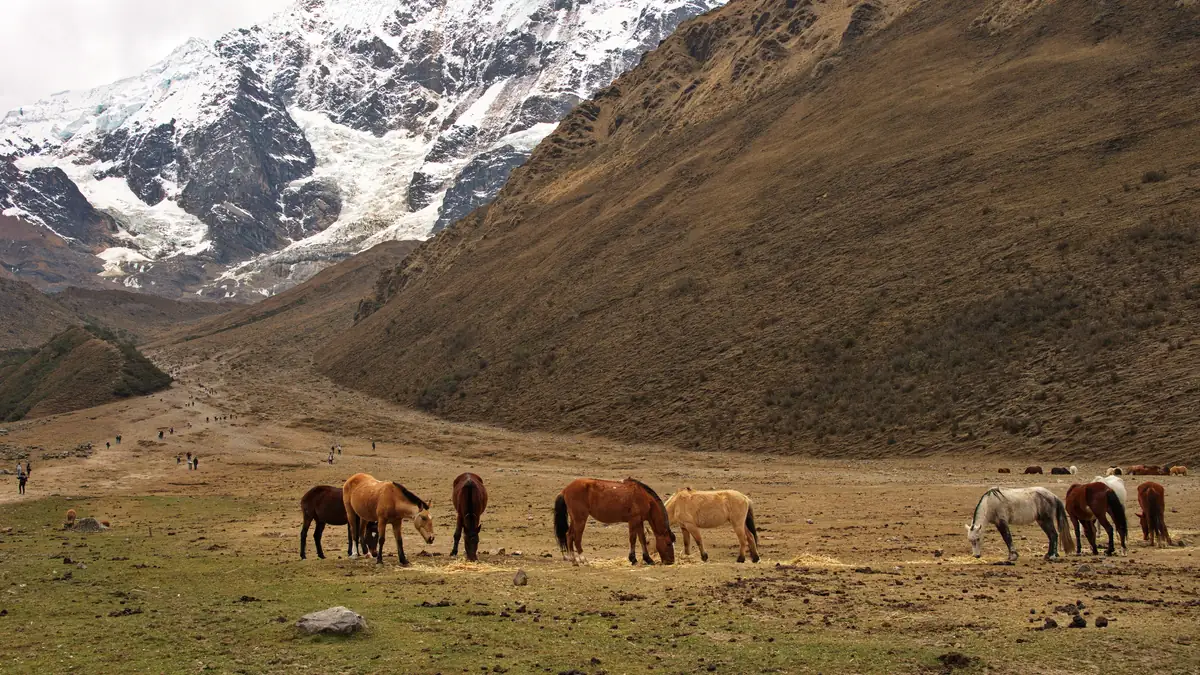
Along an Inca canal, almost flat, then the lake.
Pickup at five in Cusco, breakfast in Mollepata. Day one is the warm-up with altitude – and Humantay Lake in the afternoon is the first test of how your body handles 4,200 m.
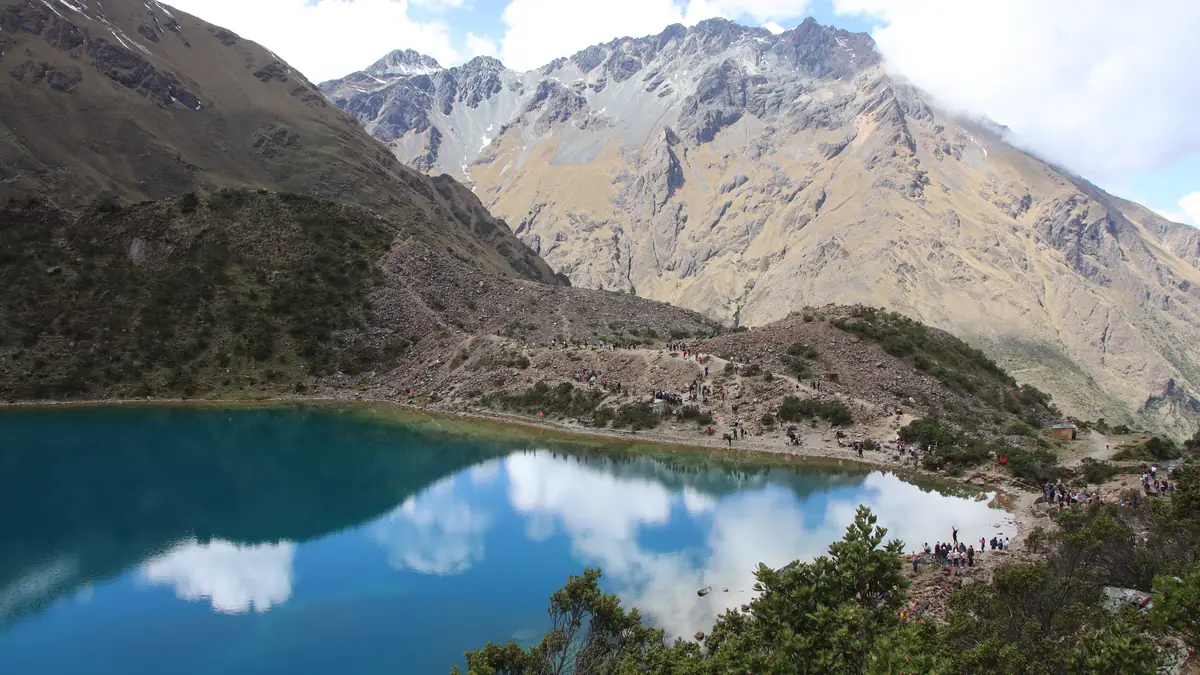
Turquoise, cold, and the glacier right above.
Three hours up and back. If you have a headache or nausea here, tell the guide in the evening, not the next morning.
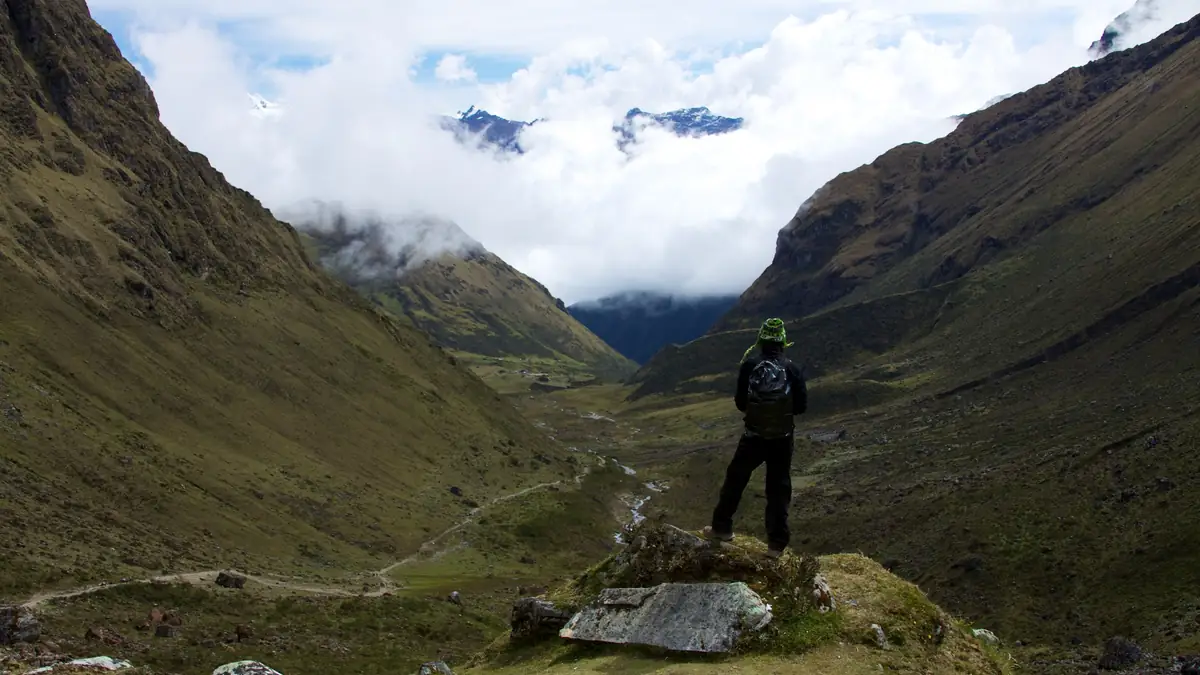
The one hard day. Then 1,700 m downhill.
Up the “path of the seven snakes” to the pass, three hours. In the afternoon the world changes: from glacier to cloud forest down to Collpapampa.
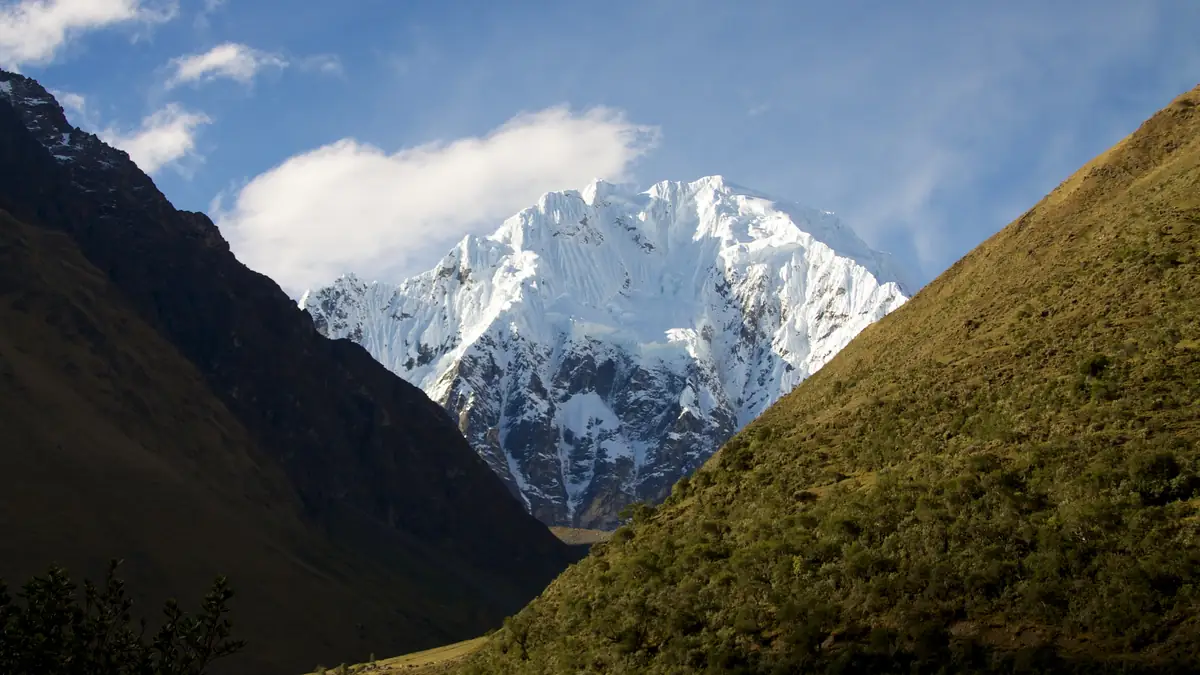
Warm, humid, coffee. The altitude is behind you.
Gently downhill between banana and coffee plantations, coffee farm at La Playa. The 4-day version drives from Granadilla and ends today in Aguas Calientes.
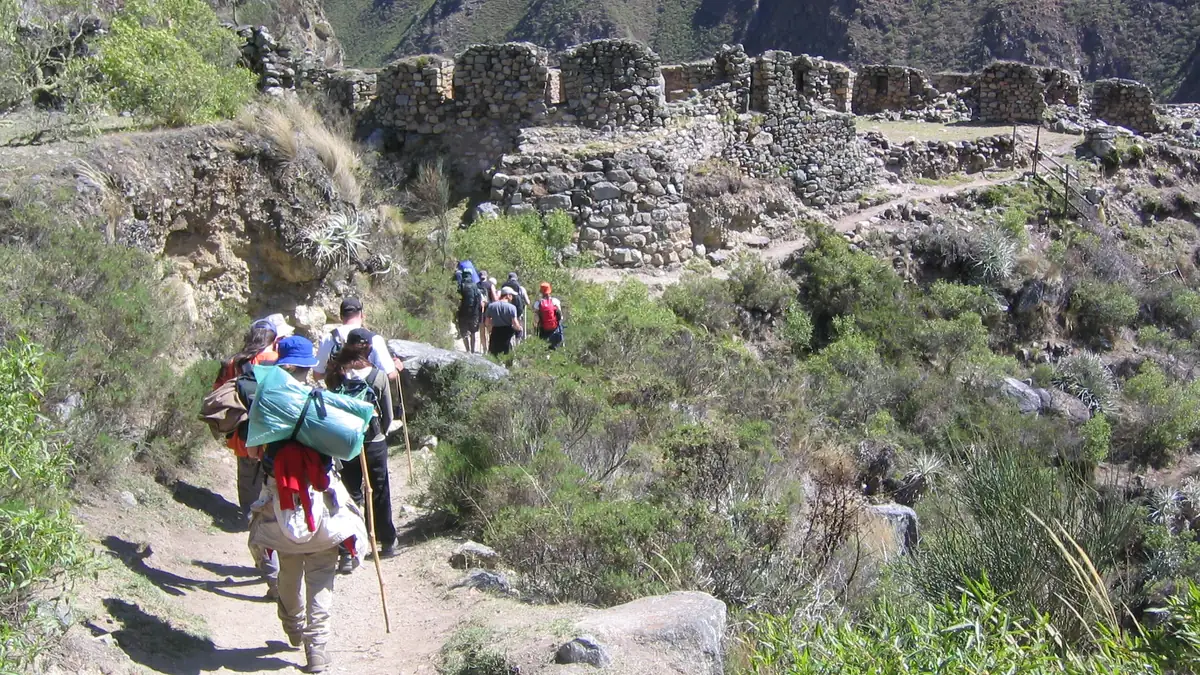
The first view of Machu Picchu – from across the valley.
Two hours up an original Inca trail to Llactapata, down to Hidroeléctrica. Then train or three hours along the tracks. Night in a hotel.
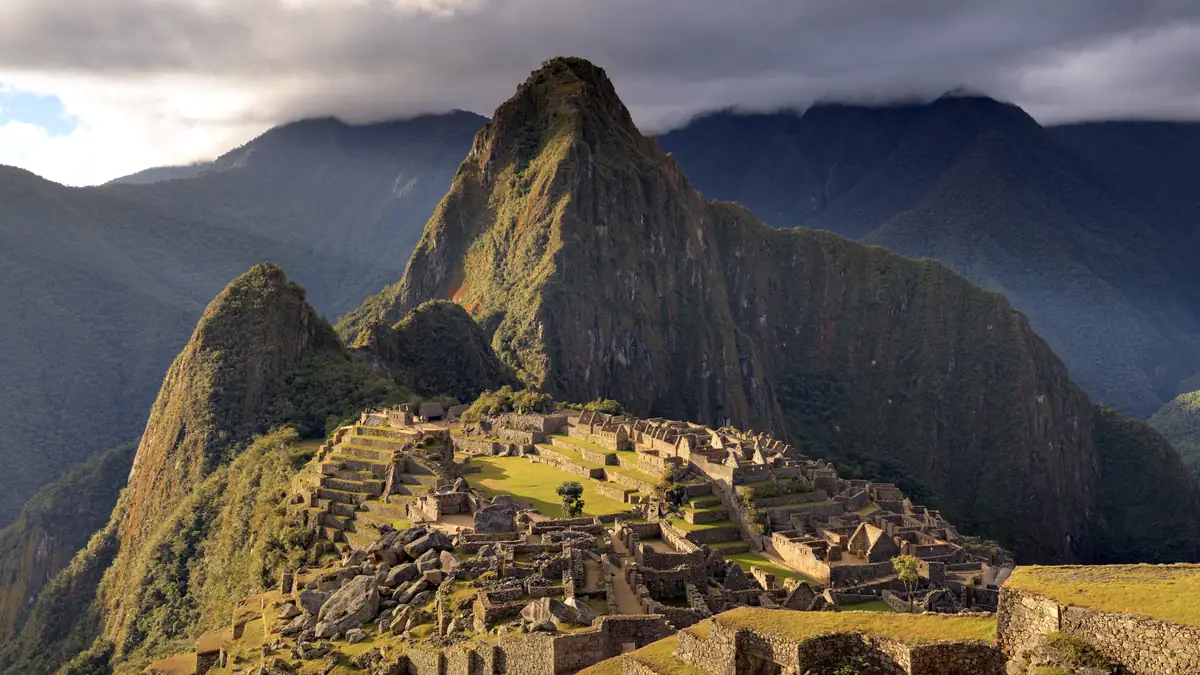
Arriving like everyone else – after four days no one else had.
First buses up, two-hour guided visit, back to Aguas Calientes, train to Ollantaytambo, transfer to Cusco in the evening.
The route in stages: altitudes and itineraries from the operator data, photos illustrate the places. The boxes show where the four compared offers differ at the same spot.
Salkantay Trekking · Classic 5 days 5 days · 4 nights
Pickup 5 am, breakfast in Mollepata, start at Challacancha (3,800 m), three hours along an Inca canal to Soraypampa; afternoon three-hour round trip to Humantay Lake.
☾ Sky Camp 3.900 mThree-hour climb via the “path of the seven snakes” to Abra Salkantay (4,630 m), three-hour descent to Huayracmachay (3,850 m) for lunch, on into the cloud forest.
☾ Mountain Sky ViewStart 6 am, gentle descent through the Santa Teresa valley past coffee and banana plantations, coffee farm, lunch in Lucmabamba, free afternoon.
☾ Super Jungle Domes 2.000 mTwo-hour climb on an original Inca trail to Llactapata with views of Machu Picchu, ninety-minute descent to Ahobamba (lunch), Hidroeléctrica; from there train (optional, paid on site) or three hours on foot along the tracks.
☾ Hotel 3 SterneEarly bus up, two-hour guided visit, back to Aguas Calientes (return bus paid on site), lunch at your own expense, train to Ollantaytambo, transfer to Cusco.
Salkantay Trekking · Short 4 days 4 days · 3 nights
Pickup 5 am, breakfast in Mollepata, three hours to Soraypampa, lunch, Humantay Lake in the afternoon.
☾ Sky Camp 3.900 mClimb to Abra Salkantay, lunch at Huayracmachay, through the cloud forest to Collpapampa.
☾ Mountain Sky ViewFive hours through the Santa Teresa valley to Granadilla, vehicle to La Playa (coffee farm), then on foot to Aguas Calientes; hot springs possible.
☾ HotelFirst buses up, two-hour guided visit, optional Huayna Picchu or Machu Picchu Mountain (USD 60, in advance), train to Ollantaytambo, transfer to Cusco.
Salkantay Trekking · Premium 5 days 5 days · 4 nights
As classic: Challacancha, Soraypampa, Humantay Lake.
☾ Sky Camp (Iglu)Via Salkantaypampa and Soyrococha to the pass, lunch at Huayracmachay, on to Collpapampa; emergency horse to the pass.
☾ Mountain Sky View (Hütten)Santa Teresa valley to Granadilla, transport to La Playa, coffee farm, Cocalmayo hot springs in the afternoon (entry included).
☾ Sacred Jungle LodgeLlactapata, descent to Hidroeléctrica, train to Aguas Calientes included.
☾ Hotel superiorBus up and back included, guided visit, Vistadome or Prime train to Ollantaytambo, transfer to Cusco.
Machu Picchu Expeditions · 5 days 5 days · 4 nights
Pickup around 4 am, stop in Mollepata (breakfast optional), start at Challacancha, lunch at camp, Humantay Lake (4,200 m).
☾ Hütte mit GlasdachThree hours and 7 km up to the pass, longest day, descent to Collpapampa (2,950 m).
☾ Sky Huts 2.950 mSanta Teresa valley to La Playa, lunch, optional Cocalmayo hot springs (30-minute drive) and zipline (both extra), bonfire.
☾ Jungle DomesTwo hours up to Llactapata, two hours down, lunch at Hidroeléctrica, two hours on foot to Aguas Calientes; dinner 7 pm.
☾ Hotel / HostelNinety-minute guided visit; ticket, bus and return to Cusco not included – arrange the way back yourself.
Stops and walking times from the operator's Viator product data, edited for length. Maps and figures illustrate the route and are not for navigation.
4 or 5 days: the same pass, a different third day
Salkantay Trekking's short version does not cut the altitude but the cloud-forest climb. On day three you walk five hours through the Santa Teresa valley to Granadilla, a vehicle takes you to the coffee farm at La Playa, and from there you walk along the tracks to Aguas Calientes. Llactapata with the first view of Machu Picchu, the night in Lucmabamba and the descent to Hidroeléctrica are dropped.
What stays the same: pickup at 5 am, Humantay Lake, the pass, Sky Camp and Mountain Sky View, the hotel night in Aguas Calientes, bus up, two-hour guided visit, train to Ollantaytambo and transfer to Cusco. The list price is USD 65 below the classic version.
With five days you get the more complete trek in the classic version. With four days the short version costs you the day many describe as the best of the second half – a question of time, not fitness: day four with Llactapata is easier than day two with the pass.
Getting back from Aguas Calientes
On the last day you take one of the first buses (from about 5:30 am, roughly 25 minutes) from Aguas Calientes up to the Machu Picchu gate. After the tour you return to town – on foot down the steps (about an hour) or by bus, which only Premium includes. The train to Ollantaytambo (about ninety minutes) and the transfer to Cusco (about two hours) are included in the three Salkantay Trekking variants; not with Machu Picchu Expeditions. Expect to reach Cusco in the evening.
When to go: dry season, rainy season, cloud forest
Cusco and the highlands have a dry season from May to September with clear days and cold nights – at Sky Camp at 3,900 m the temperature regularly drops below freezing. The rainy season runs from November to March, with January and February the wettest; the cloud forest from day three is humid all year. Unlike the Inca Trail, which closes in February for maintenance, the Salkantay route is not closed. The operators run year-round; none of the four names seasonal prices or closure months in the product data.
The UK Foreign Office notes that strikes and protests in the Cusco region occasionally disrupt train services to Machu Picchu. Salkantay Trekking reserves the right to change the itinerary for safety reasons; a buffer day in Cusco after the trek is not a luxury.
Questions about the route
Can you do the Salkantay without a guide?
Yes, the route is open and not quota-limited; only the Machu Picchu entry is personal. This page compares guided tours with camps, kitchen and gear transport. Self-organised you need tent, food and tickets on your own – a different undertaking that we do not assess here.
How long are the walking times really?
The operators state three to eight hours of walking per day; day two is the longest at six to seven hours, day five is sightseeing without trekking. The times in the itineraries are operator figures for the group, not your personal pace.
Do I see Machu Picchu before the last day?
With the 5-day version yes: from Llactapata on the opposite side of the valley on day four. The 4-day version skips Llactapata.
Sources and check status
Show 5 sources
- www.viator.com/tours/Cusco/Classic-5-Day-Salkantay-Trek-to-Machu-Picch – Salkantay Trekking, classic: itinerary with altitudes and walking times (Viator Partner API) (accessed 22 September 2026)
- www.viator.com/tours/Cusco/4-Day-Short-Salkantay-Trek-to-Machu-Picchu- – Salkantay Trekking, short: itinerary (Viator Partner API) (accessed 22 September 2026)
- www.viator.com/tours/Cusco/5-Day-Salkantay-Trek-to-Machu-Picchu-Classi – Machu Picchu Expeditions: itinerary with altitudes (Viator Partner API) (accessed 22 September 2026)
- www.gov.uk/foreign-travel-advice/peru/safety-and-security – UK Foreign Office: strikes and train disruption on the routes to Machu Picchu (accessed 23 September 2026)
- www.senamhi.gob.pe/ – SENAMHI, Peru's meteorological service: climate data for the Cusco region (dry and rainy season) (accessed 23 September 2026)