- Best visibilityOctober to November and March to April: dry, mild, clear passes
- Cold and foggyDecember to February: daytime often below 10 °C, dense fog on the passes, occasional frost
- RainMay to September, heaviest June to August: downpours, landslides, closed sections possible
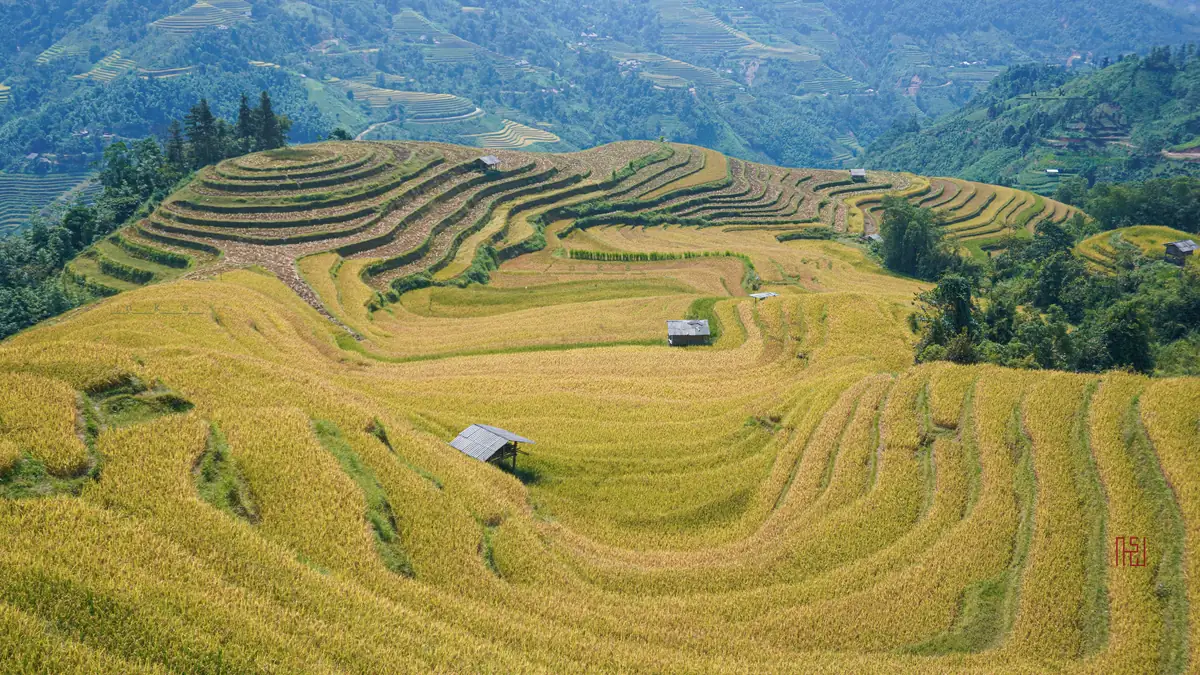
- Rice and buckwheatrice terraces turn yellow in September/October; buckwheat bloom October/November
- Weather refundZGO and Vision: yes (cancelIfBadWeather) · QT and Hong Hao: no
- HolidaysTet (January/February): full buses, closed homestays; national holidays 30 April and 2 September: high demand
The year in Ha Giang
October to November is considered the clearest time: the summer monsoon is over, the air is dry, the passes are open. Late September to October the rice terraces around Hoang Su Phi turn yellow; in October and November buckwheat blooms pink on the karst plateau. Demand is correspondingly high, homestays and buses are full.
December to February is winter: at 1,000 to 1,500 m daytime temperatures are often below 10 °C, colder at night, with fog and drizzle that can cut visibility on Ma Pi Leng to a few metres. On a motorbike that is less pleasant than on the ground. Frost, and in rare years snow, occurs. Around Tet, the Vietnamese new year (January or February), many family businesses close, and buses from Hanoi are booked out days ahead.
March to April is the second good window: warmer, still dry, peach and plum blossom in March. From May the rainy season begins with afternoon thunderstorms; June to August bring the most rain, landslides and occasionally closed roads. The landscape is then green and the paddies flooded – if you ride in summer, plan rain gear and time buffers. September is the transition: the rain eases and the terraces change colour.
What weather means on the tour
Easy Rider tours keep going in rain; rain gear is provided by QT (“basic rain clothes”) and Hong Hao (“rain coat”), ZGO and Vision say nothing about it. In fog the viewpoints become stops without a view; the boat trip on the Nho Que usually goes ahead regardless. After landslides the riders change the route; the operators state no rule for that, and you should not expect one.
What you control: in winter warm layers, gloves and a neck warmer against the wind; in summer a rain cover for the backpack strapped to the back of the bike, and shoes that can get wet. More on the packing list.
Weather cancellation and refunds: what the four products promise
The Viator product data contain a field “cancelIfBadWeather”. It means: if the operator cancels for weather, you get a refund or a new date. It does not mean you can cancel yourself when it rains – the normal 24-hour cancellation period applies to that.
- ZGO: weather cancellation with refund – yes.
- Vision: weather cancellation with refund – yes; plus cancellation for insufficient travellers.
- QT: no.
- Hong Hao: no.
That does not mean QT and Hong Hao set off in a typhoon. It means the platform holds no weather rule for these products and, if it comes to it, you negotiate with the operator. If you book in the rainy season you now know for which two products the refund is in writing.
Month by month
| Months | Weather | Visibility | Notable | Suitability for riding |
|---|---|---|---|---|
| Dec – Feb | cold, damp, fog | often poor | Tet: full buses, closed businesses | possible with warm clothing; views a gamble |
| Mar – Apr | mild, dry | good | peach and plum blossom | good |
| May – Aug | hot, heavy rain | variable | landslides, closures possible; green terraces | with rain gear and buffer |
| Sep | transition, easing rain | improving | rice terraces changing colour | good from mid-month |
| Oct – Nov | dry, pleasant | best | buckwheat bloom; high demand | best time |
Climate summary based on Vietnam's national meteorological service data for Ha Giang province; not a forecast for your date.
Questions about timing
When is the buckwheat bloom?
Typically October to mid-November on the Dong Van plateau, shifting two to three weeks from year to year. A date in late October is most likely to hit it.
Can I ride in winter?
Yes, all four products run year-round. Expect fog and temperatures below 10 °C on the passes and pack accordingly. The chance of a clear view from Ma Pi Leng is lowest in winter.
Are there seasonal prices?
The four products' list prices are the same year-round per the availability data; we do not evaluate special prices for individual dates. The price on the booking page for your date applies.
Sources and check status
Show 5 sources
- nchmf.gov.vn/ – Vietnam National Centre for Hydro-Meteorological Forecasting: climate and weather data for northern Vietnam (accessed 23 September 2026)
- www.viator.com/tours/Hanoi/From-Hanoi-3-Day-Ha-Giang-Loop-Adventure-Cu – ZGO: cancelIfBadWeather = true (Viator Partner API) (accessed 22 September 2026)
- www.viator.com/tours/Hanoi/Ha-Giang-Loop-Tour-4-Days-3-Nights-with-Qui – Vision: cancelIfBadWeather = true, cancelIfInsufficientTravelers = true (Viator Partner API) (accessed 22 September 2026)
- www.viator.com/tours/Ha-Giang/Motorcycle-Tour-of-Ha-Giang-Loop-4D-3N-a – QT: cancelIfBadWeather = false; rain gear included (Viator Partner API) (accessed 22 September 2026)
- www.viator.com/tours/Ha-Giang/Ha-Giang-Loop-Ultimate-3-Day-Tour-with-L – Hong Hao: cancelIfBadWeather = false; rain coat included (Viator Partner API) (accessed 22 September 2026)